An Interview With Flora Nwapa
An Interview with Flora Nwapa on Mammy Water, Ogbuide, the water goddess of Oguta Lake, the impact of Christianity, women, and Nwapa's novel, Efuru.
By Sabine Jell-Bahlsen
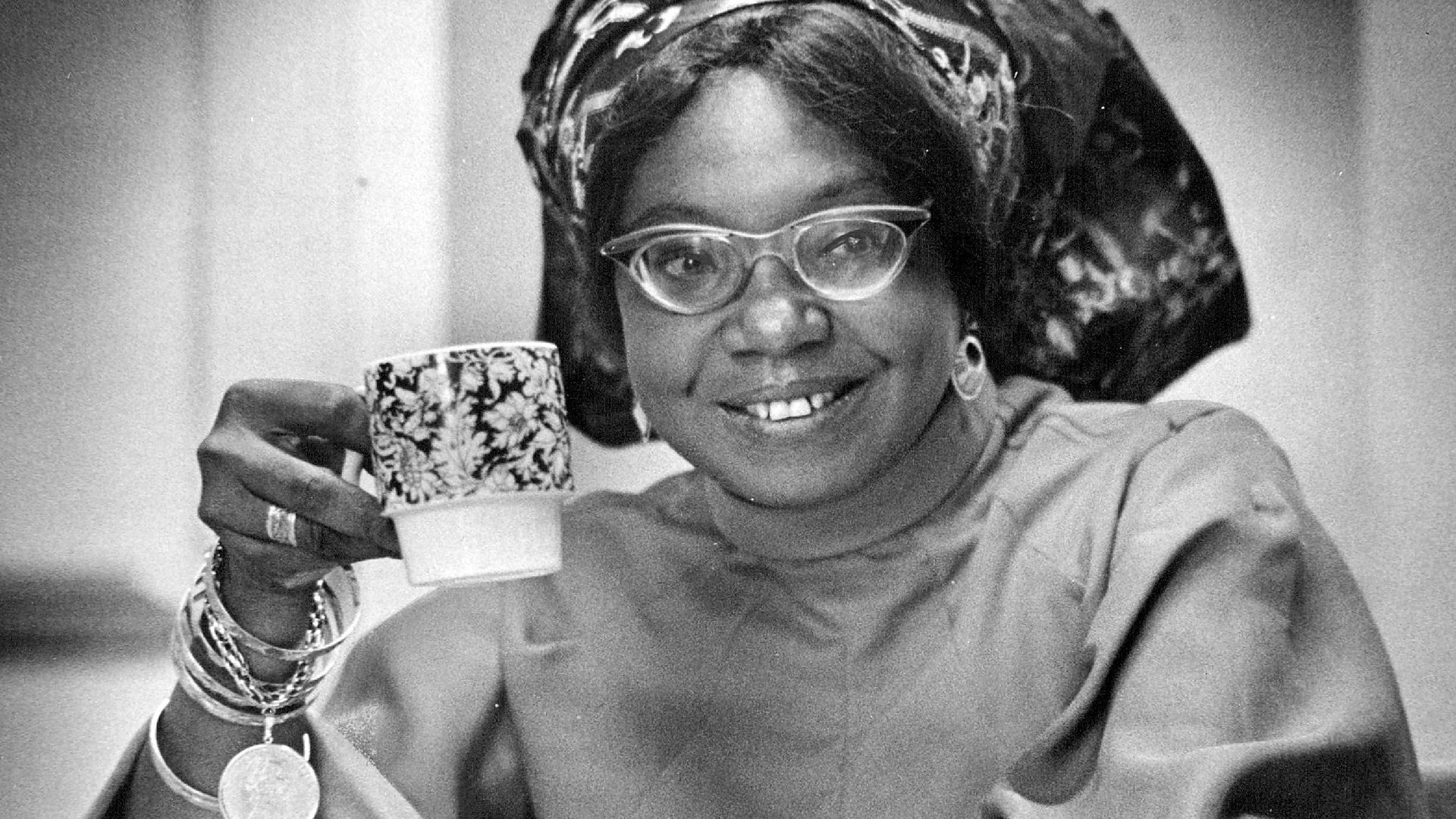
As I prepare to work on Flora Nwapa’s profile for the Igbo Legends series, it occurred to me that an interview she gave to Dr. Sabine Jell-Bahlsen, author of The Water Goddess in Igbo Cosmology: Ogbuide of Oguta Lake, at her office in Enugu on November 4, 1988, five years before her passing, would make an interesting companion piece to the main profile.
Flora Nwapa is an Igbo icon whose work, I believe, has positively influenced many people around the world and continues to offer so much to learn from.
I've kept my reflections on this interview as concise as possible, and I hope you find them insightful and thought-provoking.
You can also read the interview for yourself and share your thoughts with me in the comments. I'm always happy to chat.
Enjoy!
Édì ásọ́ íhé ị́lụ́: The civet cat does not shrink from a bitter substance.
Flora Nwapa’s doubts about Ogbuide, the lake goddess, as expressed in her novel Efuru, and her willingness to question the validity of this revered spiritual force of her Oguta community, would have been considered blasphemous, perhaps even cantankerous, by some of the believing indigenes of her hometown.
Yet, should the possibility of displeasing her own people have deterred the great Flora Nwapa from critically examining womanhood and the beliefs surrounding it? Would she be the great thinker we revere today if she had not dared to plant such seeds of doubt, or perhaps water those that already existed, so publicly?
One cannot help but wonder at her disregard for caution when confronting the reputation of Uhammiri.
I find it particularly interesting how such seeds of doubt can pass from one generation to another. Perhaps we see something of this in her daughter, Ejine Olga Nzeribe, who wrote her mother's biography and, in discussing the famed Oguta Lake and its legends, appears more inclined to explain its mysteries as natural phenomena than through the spiritual beliefs surrounding them.
As our people say, “Ágụ́ anághị̀ ámụ́ nwá ụ̀jọ́” — The leopard does not give birth to a fearful offspring.
More than anything, Flora Nwapa was a woman committed to discovering and defining herself, willing to confront uncomfortable questions even at the risk of being misunderstood by her own people, or having to retract her own misunderstanding.
Ómé Údó: Bringer of peace.
There is a desire for peace that Flora Nwapa speaks of through her characters, one that is very much tangible in real life. Yet, it becomes clear that the absence of this peace is deeply connected to the expectations society places on the nature of a woman.
Consider the attachment of womanhood to motherhood, to the bearing of children. A woman can be anything, she can be many things: wealthy, prosperous, educated, accomplished in several ways. But without the fruit of the womb, what is she? Who is she, really, to claim womanhood in the eyes of her community?
It is this reality that Flora Nwapa presents as a thief of peace.
One might argue that a woman should simply seek self-actualization beyond societal expectations. “But why can't she just be herself and forget what others think of her?” one might ask.
Really? Really, though?
Who are we as individuals without the backbone of community, especially as Africans, as Igbos? What is a person's worth outside the community to which they belong?
Even our word for a poor person, OGBENYE, speaks to this relationship. Ogbe, the community, and nye, to give. The community is expected to give to those in need, to recognize their place within it.
Is a woman's personhood then worth less than that of the poor or helpless, that she must be expected to find peace and actualize herself entirely outside the consciousness of her own community? Why should she have to separate herself from the very society that gives meaning to so much of her existence simply to be recognized as a complete human being?
Is it then so strange that Nwapa connects the absence of peace in womanhood to the absence of progressive cultural change?
For me, the important takeaway here is that how we think, not only as individuals but as a community of people, is itself a condition for peace.
Our collective consciousness can be a great bringer of peace, but only when we are willing to examine it, allow it to evolve, and change the beliefs that continue to deny others the peace they deserve.
Éwéré ótù ọ̀kụ́kọ̀ chụ́ọ́rọ́ árụ́sị́ àbụ́ọ́ àjà, hà ègbúó mmádụ̀ mèzùò yá
Flora Nwapa recounts stories of how the successful return of Ugwuta indigenes to their homeland, after the Biafran war, was attributed to the intervention of Uhammiri. This attribution greatly irritated church leaders, some of whom responded with fanatical ultimatums, demanding that Christians who were also indigenes make an absolute choice between their faith and the spiritual traditions of their people.
This account reminds me of similar stories from other Igbo communities, where the intervention of local deities was credited, in one way or another, with certain events during the Biafran War.
These accounts are not without foundation in the lived experiences and memories of our people. Yet, the pressure from foreign religions, particularly those determined to discredit or obliterate our indigenous spiritual forces, makes it terribly difficult for such stories to be told honestly.
The influence is so pervasive that even some of the people recounting these experiences, people who openly acknowledge what they believe to have been the intervention of their local deities, seem to experience a sudden religious discomfort (psychosis) when telling their stories.
It is almost as though they cannot conclude their accounts without immediately offering an equally strong disclaimer against the very spiritual traditions they have just given credit to. They must quickly reassure their listeners that they do not participate in such “fetishism,” as though acknowledging an experience is itself an act of religious betrayal.
I find this internal conflict particularly troubling. What does it do to a people when they can no longer speak freely about their own experiences without feeling compelled to condemn the very beliefs through which those experiences were understood?
It brings to mind an Igbo adage:
“When a fowl is sacrificed to two deities, they will kill a human to complete it.”
One cannot help but wonder whether this internal conflict, imposed on our people through the demands of foreign religion, is itself a worthless fowl for which we continue to pay a much greater price.
My Notes On Flora Nwapa From This Interview
Hometown: Ugwuta, which has Uhammiri/Ogbuide the lake Goddess as the patron deity.
“Ugwuta” is the Igbo name of Oguta in current day Imo state.
Flora Nwapa’s parents were the Children of the first converts to Christianity. Both of her grandparents were Christians, fanatical ones. She believed this Christian background + her upbringing prevented her from being a “mammy wata” worshiper.
Her paternal grandfather was not a Christian. He resisted Christianity until the very end. Her grandmother on the other hand, was a fanatic Christian, so much so that it broke their marriage.
Flora Nwapa came from a very well to do (wealthy) background.