Since we live in modern times, where many ancient practices are questioned or dismissed, one may wonder:
Why do Dibias still rely on something as simple as water and salt for purification?
Is it symbolic? Is it ritualistic habit? Or is there something deeper?
In Igbo spirituality, the use of water and salt is based on Igbo cosmology, ancestral memory, and the very origin of purification itself.
Water and Salt: More Than Physical Substances
To the Igbo mystic, water and salt are carriers of meaning and sacred memory.
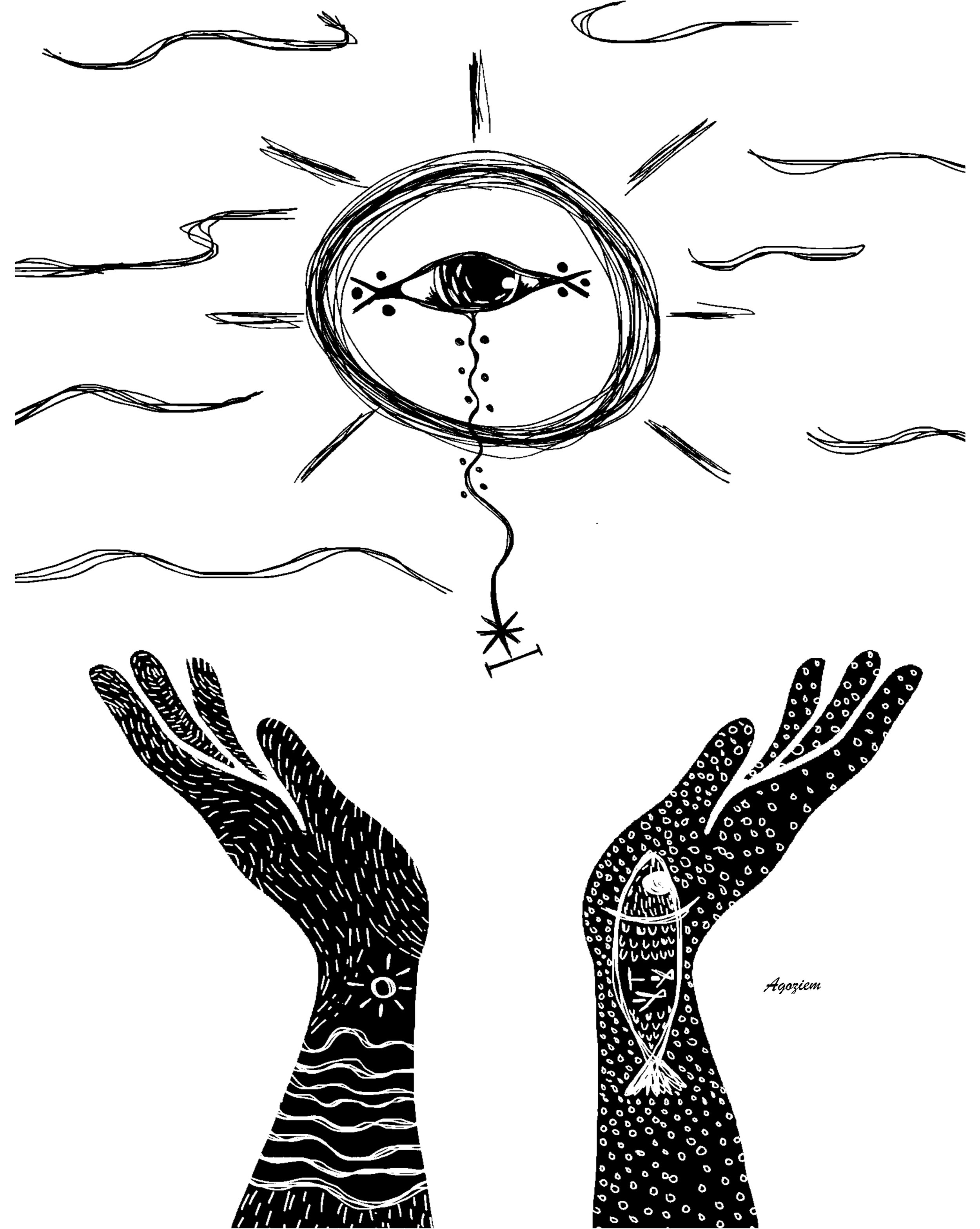
They are said to be the primary components of tears.
And tears, in Igbo consciousness, are a mechanism for release, cleansing, and restoration.
When a person cries deeply:
Emotional tension dissolves
Internal heaviness lifts
Clarity returns
Dibias extend this same principle outward. What tears do internally, water and salt do externally.
The First Purification: Chukwu’s Tears
There is a very insightful narrative in Igbo cosmology:
After a great destruction, marked by the first death and pollution, the earth was cleansed by Chukwu Himself through tears (Anya Mmili).
These tears are believed to have formed:
Oshimiri / Orimili Nnu — the salty waters, the oceans
Through this act, the polluted earth was washed, and balance was restored.
This is an instructive Igbo myth.
It tells us that:
Pollution requires cleansing
Cleansing requires depth
And the original method of purification was water combined with salt
Why the Land Must Be Cleansed
After that first purification, the earth, Ala/Ani, became sacred again.
In Igbo thought:
The land is conscious
The land is alive
The land holds memory
When an abomination occurs e.g violence, injustice, moral violation, it does not only affect people. It pollutes the land.
And polluted land must be cleansed as a form of restoration. Most Igbo communities, if not all, have annual rites or festivals to ensure their land is cleansed.
Water and Salt as Agents of Restoration
Dibias continue to use water and salt because they mirror the original act of purification.
Water:
Washes
Carries away
Restores flow
Salt:
Preserves
Neutralizes
Stabilizes
Together, they:
Break down negativity
Dissolve stagnation
Re-establish balance
This is why salt water is used in cleansing rituals, ablutions, and spiritual baths.
Cleansing Pollution and Hatred
Pollution is not always physical. It can be:
Emotional (hatred, resentment)
Spiritual (misalignment, imbalance)
Environmental (spaces filled with tension)
Water and salt are used to address these layers.
Just as tears release emotional burden, salt water helps:
Clear accumulated negativity
Reset energetic states
Restore inner and outer harmony
The process is simple, but the effect is profound when done with intention.
Why This Practice Endures
In a changing world, many tools evolve. But some remain because they are fundamental.
Water and salt endure because:
They are accessible
They are natural
They are aligned with origin
They work
The Igbo Dibia or mystic does not abandon what is effective simply because it is simple.
To Sum It Up
The continued use of water and salt by Dibias is a return to the first (principle of) cleansing, the original act of restoration carried out by Chukwu.
When pollution occurs, within a person, a space, or a community, the traditional response remains the same:
Repent.
Release.
Restore balance.
Water and salt are natural reminders. That no matter how deep the pollution, cleansing is always possible.