To an observer, it may seem unusual, almost mysterious even, that some Dibias incorporate fish bones (okpukpu azu) into the process of preparing or programming their Afa strings.
Why fish bone?
Why not wood, metal, or something more “ordinary”?
The answer is based on Igbo cosmology, symbolism, and the transmission of spiritual insight.
The Story Behind the Practice
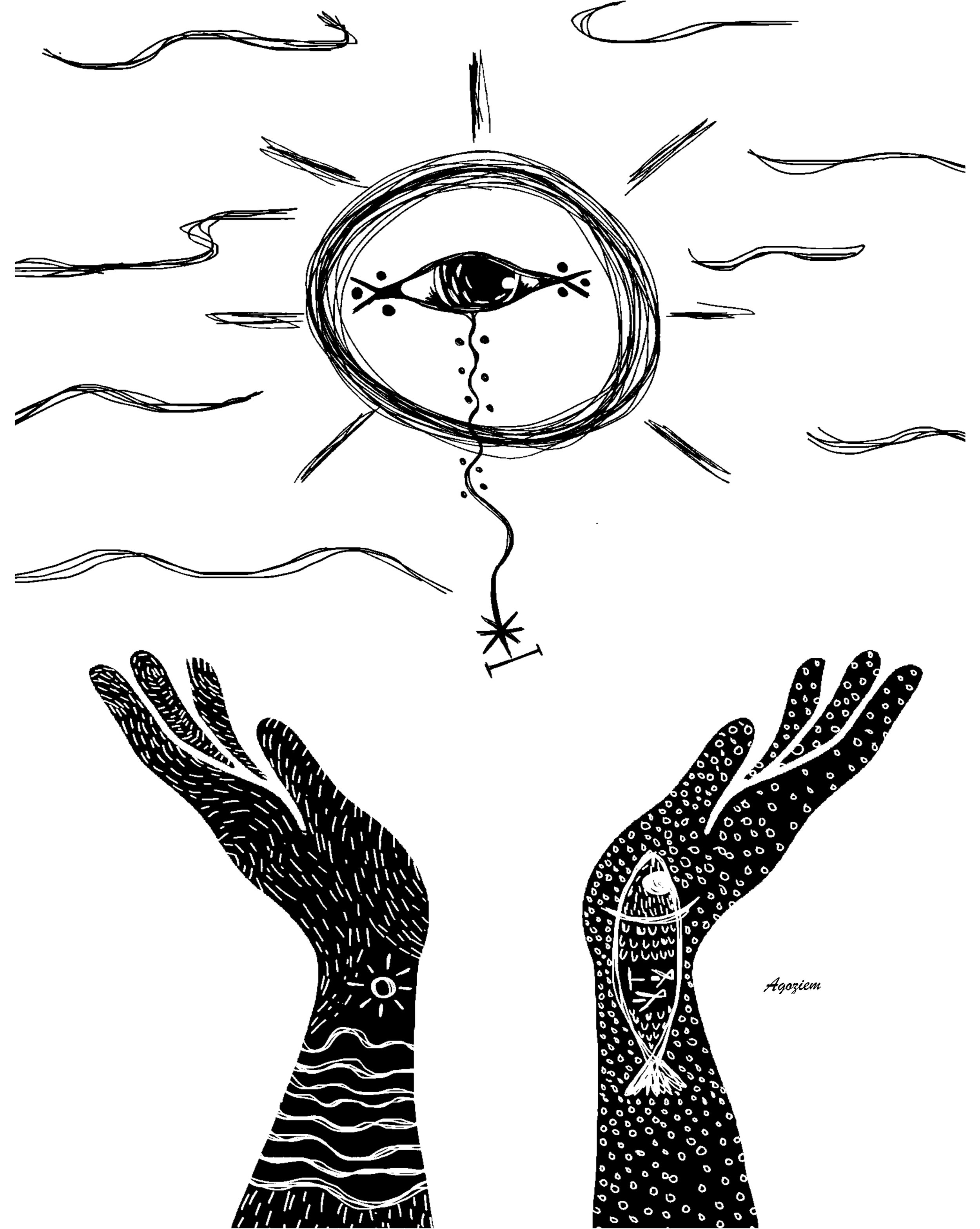
In Igbo cosmological mythologies, there are narratives that connect certain fish, such as Asa fish or Ekwu fish, with the origin of spiritual sight.
It is believed that these fish once swallowed the eye of Aro (Aro mgbo), a symbolic reference to divine perception, insight, and the ability to “see beyond.”
What does this mean?
It means that these fish became associated with:
Hidden knowledge
Deep perception
Access to unseen realities
So when a Dibia uses fish bone in Ikwu Afa (the programming or activation of Afa strings), they are invoking a symbol of vision.
Fish as Symbols of Depth and Insight
Fish live beneath the surface, within waters that humans cannot easily access.
In many traditions, including Igbo thought, this makes fish a symbol of:
Depth
Hidden worlds
Subtle awareness
Afa itself is about interpreting patterns that are not immediately visible. It is about reading what lies beneath appearances.
So the use of fish bone aligns perfectly with the purpose of Afa, which is to access what is hidden.
Why the Bone?
The bone represents structure, the inner framework of the fish.
By using the bone, the Dibia is working with something that:
Has endured beyond flesh
Holds the “essence” of the creature
Carries symbolic memory
In this context, the fish bone becomes a conduit of encoded meaning, not just a physical object.
Programming Afa Strings (Ikwu Afa)
When Dibias prepare Afa strings, they are programming intention, alignment, and symbolic intelligence into the system.
Incorporating fish bone into this process can serve as:
A symbolic anchor for insight
A connection to cosmological narratives
A reinforcement of the diviner’s ability to “see clearly”
It is less about the object itself and more about what it represents and activates.
Variations Across Communities
It is important to understand that Igbo spirituality is not uniform.
Different communities may:
Recognize different fish species
Tell different versions of the cosmological story
Use different materials in Afa preparation
For some, it may be Asa fish. For others, Ekwu fish or another species entirely.
What remains consistent is the association between fish and spiritual perception.
Not a Universal Practice
Equally important is that not all Dibias use fish bones. And not all Afa strings include them.
Some traditions rely on other symbolic materials. Others focus purely on the structure of the strings themselves.
This diversity reflects its adaptability and depth.
The Deeper Lesson: Tools Carry Meaning
The use of fish bone reminds us of something essential in Igbo spirituality:
Tools are never random. They are chosen for what they represent or symbolize.
A Dibia never picks random materials, they select symbols that align with:
Their lineage
Their training
Their cosmological understanding
This is why two Afa practitioners may use different methods, yet both remain effective within their own frameworks.
To Sum It Up
The use of fish bone in the programming of Afa strings is symbolism grounded in ancestral memory, meaning, and purpose.
It reflects a worldview where:
Nature is not separate from knowledge
Objects carry memory
Insight is cultivated through alignment
And perhaps the most important lesson is this:
To understand such practices, you must look beyond the surface, just as Afa itself teaches.




























Join Odinani Mystery School for access to Exclusive in-depth teachings on ancient Igbo wisdom and mystical sciences!