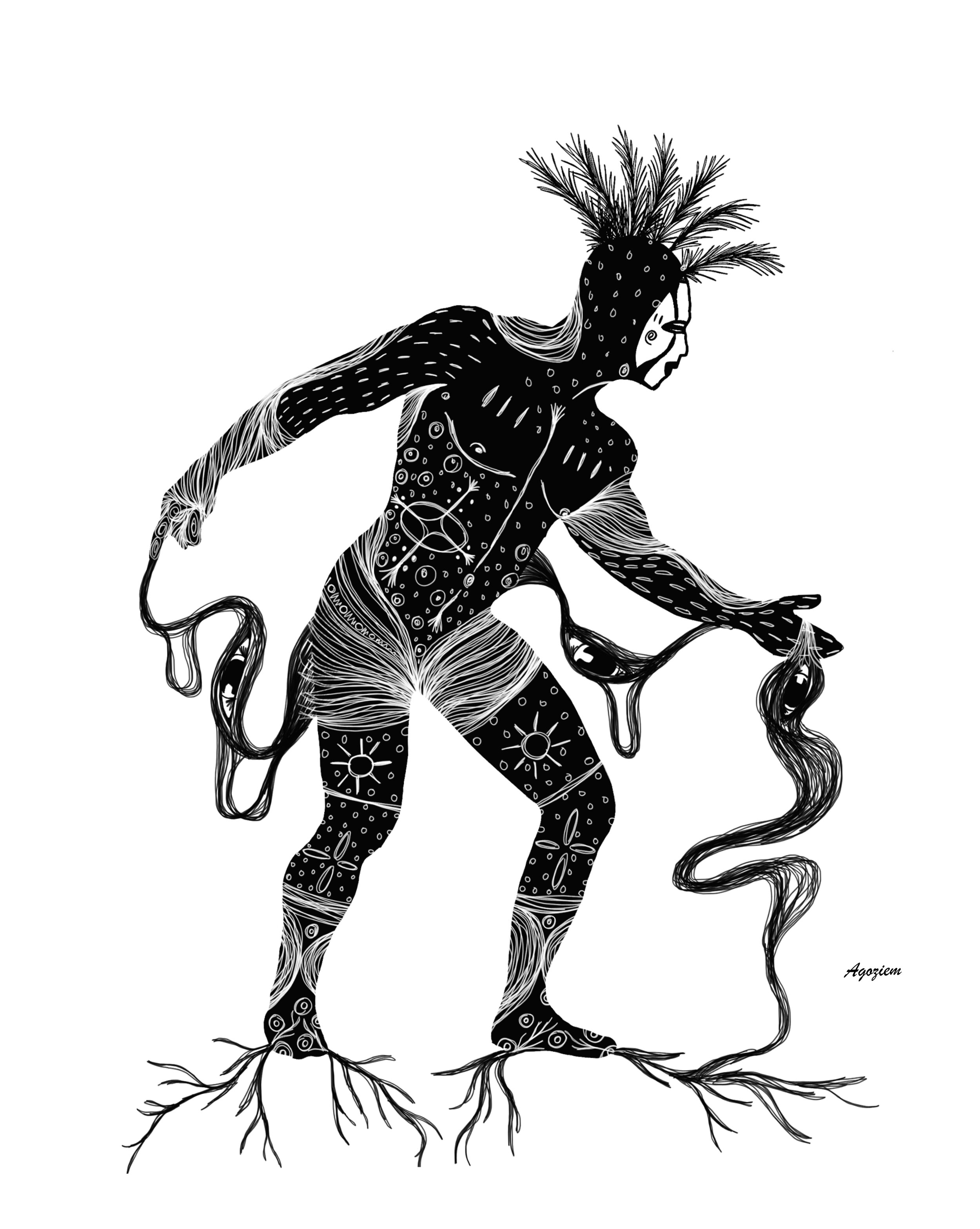
"Àgbányéghí ótú mmádụ̀ màrà, ò nwéghí íké ílí ònwé yá" — No matter how much a person knows, they can never bury themselves.
"Àhá àchọ́tá ífé mmụ́ọ́ nà bé mmádụ̀" — One does not find things that belong to the spirits in the land of humans!
"Ágwụ̀ adị́ghị́ mmádụ̀ àgwụ́" — Mankind cannot exist without the manifest spirit of God.
"Áká ọ́rụ́ mmádụ̀ kà éjì àmá yá" — A person is known by their handwork.
"Ànà mmụ́ọ́ lélúó mmádụ̀ àpụ́họ́ ị́sá ya" — The Land sold by spirits is clearly beyond human redemption.
"Ànárọ́ èbú Ànà èbú màkànà ọ́ yá nwè mmádụ̀ nííné" — No one carries off the land or permanently dominates it, for it owns all and sundry.
"Chúkwú nyèrè àlà ọ̀fọ́ kà ónyérúó mmádụ̀" — God gave the sacred Ofo staff to Ala the primal Earth Spirit to eventually hand it to human beings.
"Ébé mmádụ̀ àbụ́ọ́ gbúrù ónwé há bēé ísí, ònyé átọ́ nọ́ yá" — Where two people killed and beheaded each other, there must have been a third person there.
"Ébé ọ́kụ́ n'ènwú kà ánà àfụ́ mmádụ̀, nà ọ́kụ́ nà ndụ̀ kwụ̀" — Where you find fire, you find human existence for fire and life are one.
"Éwéré ótù ọ̀kụ́kọ̀ chụ́ọ́rọ́ árụ́sị́ àbụ́ọ́ àjà, hà ègbúó mmádụ̀ mèzùò yá" — When a fowl is sacrificed to two deities, they will kill a human to complete it.
"Íhé mmádụ̀ ná-ámághị́ tọ́rọ́ yá" — What a person is ignorant of is older than them.
"Ífé nííné mmádụ̀ gà àbụ́ nọ̀ n'írú; ékwúbé, n'īrú kàchà" — All that one will be resides on their face. In the final analysis, the face is the greatest.
"Mmádụ̀ anághị̀ ánọ́ n’íyī nchá ábá yá n’ányá" — A person should not let soap get into their eyes while they are in the stream.
"Mmádụ̀ ánághị́ àkárị́ chí yá" — A person cannot be greater than their Chi.
"Mmádụ̀ dáā élú, yá áhụ́ọ́ àlà áma" — When a person falls from a height to the ground they will take special notice of the ground.
"Mmádụ̀ kwúó ébé mmírí márā yá, a mārā ótù e sī émēnwúrū yá ọ́kụ́" — When one says at where the rain began to beat them, then one will know how great a fire to make for them.
"Mmádụ̀ mētá ụ́kà yá ámārā onye ìro yá" — When a person gets into trouble then they discover who their enemy is.
"Mmádụ̀ bụ̀ chí íbè yá" — Humans are (Chi) destiny helpers to each other.
"Mmádụ̀ bụ̀ mmílí ésìnyèlù n'ọ́kụ́" — Human beings are like water-holding pots placed on a fire stand.
"Mmádụ̀ bụ̀ mmụ́ọ́ lóró ụ̀wà" — Human beings are incarnated spirits.
"Mmádụ̀ bụ̀ ọ́kụ́ nà mmírí" — A human being (the enlightened one) is a synthesis of fire and water.
"Mmádụ̀ jìrì ụ́kwụ́ yá zọ́tá àkpànà, íhé átọ́ mébìrì. Ụ́kwụ́ yá zọ̀tàrà àkpànà, áká yá ó jìrì mété àkpànà àhụ́ wéé síé ná ímí, nkè íkpé ázụ́ bụ̀ ímí yá" — When someone steps on chicken feces, three things have been smeared. The feet that stepped on it, the fingers they used to touch the feces to smell, and the nose that smelt the feces.
"Mmádụ̀ jụ́ọ́ díbị̀à, díbị̀à à jụ́ọ́ Chí yá" — What a person asks a dibia, a dibia asks their Chi.
"Mmádụ̀ n'ābọ̀ n'ānụ́ ọ̀gụ̀, ónyé ñkè ị́tọ́ bàtá ògbóró há yá bụ́ ọ̀gbọ̀gụ̀" — When two people are fighting, the third person on meeting them proceeds to bring them to order.
"Mmádụ̀ sì n'ālà pùté" — Human beings sprouted from the ground.
"Mmádụ̀ wụ̀ Ìkórò Chúkwú jì hiwe òkìkè" — Mmadu the enlightened one is the sacred Ikoro wooden slit-drum with which the Supreme Spirit consolidated all creation.
"Mmụ́ọ́ nà mmádụ̀ nà-àzụ́ áfị́á mànà òfèkè ámárọ̀ọ̀" — Spirit and human beings are in constant communication, but the ignorant one does not know.
"Nkį́tá sį̀ ná ọ́ ná-ábụ́ ya sį́ ụ́mụ́ mmádụ̀ chụ́ọ́ ájà ká ha dį́ ndụ̀, ha asį́ ná ya chọ́rọ́ į́ráchá ọ́bárá" — The dog says that whenever it advises humans to perform a sacrifice so that they might live, they respond by saying that it gives advice so that it might lick the blood of the sacrifice.
"Nwá mmụ́ọ́ émégbúná nwá mmádụ̀, mà nwá mmádụ̀ émégbúná nwá mmụ́ọ́" — The spirits should not maltreat humans, but humans should equally not offend the spirits.
"Ọ́ bụ̀ nà ọ́rụ́ mmádụ̀ kà chí yá sì èké yá" — It is from a person's work that their chi manifests their best self.
"Ọ́chị̀ ánághị́ àkwátù mmádụ̀, kámà ọ́ bụ̀ mmádụ̀ nà-àmá ụ́má ádàrá ọ́chị̀" — Laughter doesn't push anyone, people willingly fall for it.
"Ógè ádị́ghị́ échè mmádụ̀" — Time waits for no one.
"Ọ̀kụ́kọ̀ àgwụ́gó bé mmádụ̀ égbè wéé búwé mbè" — Are hens extinct in human settlements for the kite to begin to carry off tortoises?
"Ọ́ kwá àkọ́ n'úchè bụ̀ nà mmádụ̀ àmáká!" — It is the exercise of wisdom and intellect that epitomizes the beauty of being human.
"Ọ́ mmádụ̀ wụ̀ Ágwụ̀ ná àkpá ònwé yá" — Agwu is the human being and the human being is Agwu.
"Ọ́ mmádụ̀ wụ̀ mbékwú" — It is the human being that is hidden in the tortoise of Igbo tales.
"Ọ́ mbékwú kà èbóró íhé níílé mmádụ̀ mékọ̀làtàrà, mànà ọ́ mmádụ̀ lètèrè nà mbékwú màchà wèré kwé n'íshí" — All the wrong acts done by human beings are heaped on the tortoise in Igbo tales, but it’s also the human being that discovered that the tortoise is aware of this and actually nodded in concurrence.
"Ònwéré k’ọ́dị̀ nà mmádụ̀ ádị́ghị́ àtá óké, mànà ó jì ézé èké yá ụ́mụ̀ ntàkírí" — It’s odd that a person does not eat rats but uses their teeth to share it for the children.
"Ònwérọ́ ónyé ọ́bụ́nà gà-àbụ́ mmádụ̀ Ágwụ̀ áhá-àmá" — There is no one who can become a fulfilled person that will not be influenced by the spirit of God.
"Ónyé fụrụ mmadụ, àfúgó ọ̀rà n’ābọ̀" — The one who sees a human being has seen the universe in its entirety and profundity.
"Ónyé nwéré mmádụ̀ kà ónyé nwéré égó" — A person who has a community of people is greater than an individual with only money.
"Ụ̀wà ányị́ bụ̀lụ̀ ụ́nọ̀ ụ́zụ́ áká, ányị́ bụ́ mmádụ̀ àbụ́lụ́ ụ́mụ̀ ọ̀dị̀náká ụ́zụ́" — If our universe is the first and original mystic furnace, then we human beings are inheritors of the mystic smithing hand of creativity.
F. C. Ogbalu (1965) on Igbo proverbs and states that:
Igbo proverbs are accumulation of Igbo experiences throughout the history of the Igbos. In absence of any written history, they serve as the medium through which much can be learnt about the Igbos. Their past history, their philosophy of life and family structure, their politics and religion can best be learnt through the proverbs (p.5).