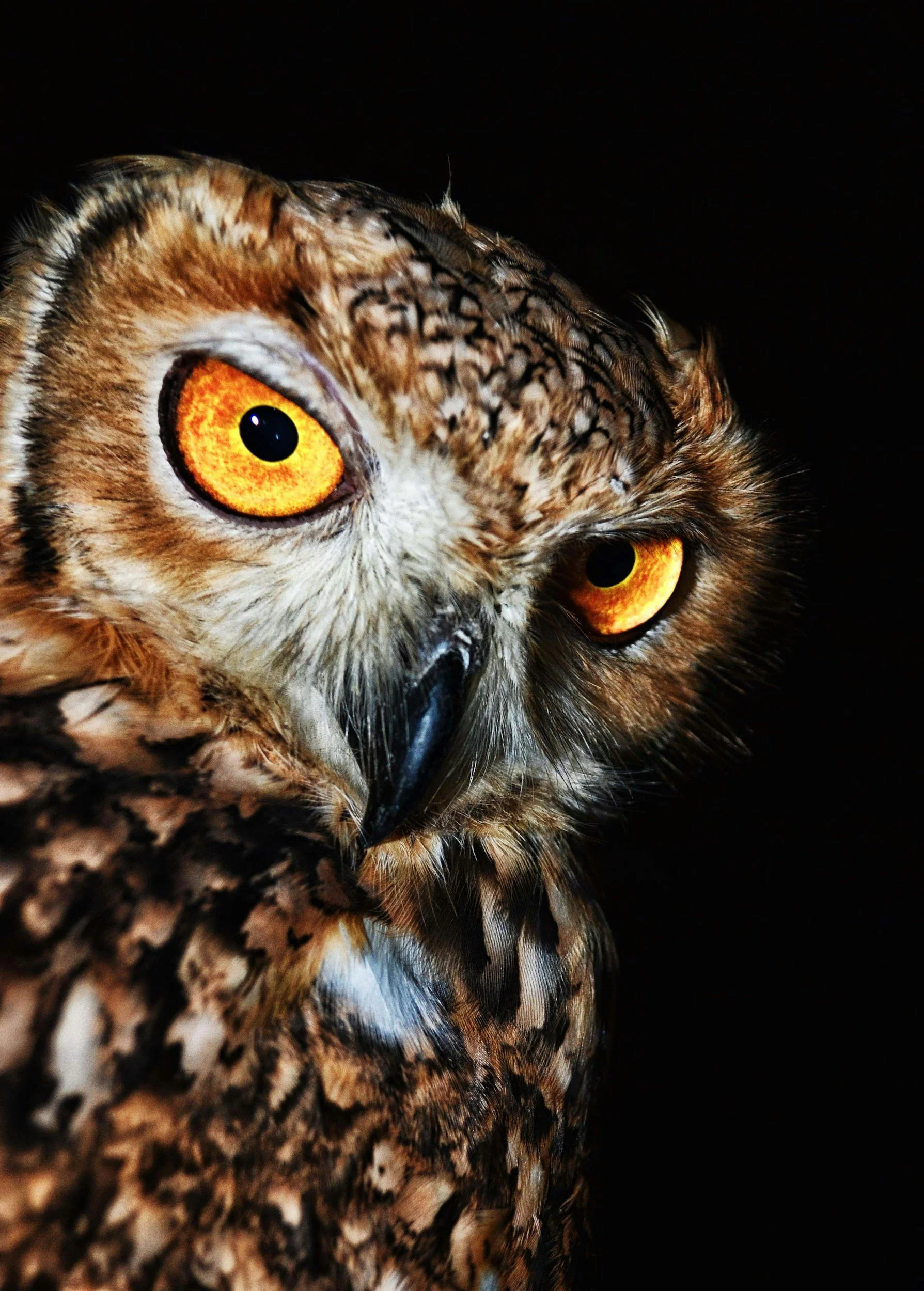
In many Igbo communities, the sudden cry of an owl at night or the strange hooting of a nocturnal animal can still freeze conversations mid-sentence. Even among people who no longer openly subscribe to traditional belief systems, there is still a subtle discomfort; an instinctive pause that occurs when such events take place.
This reaction is not accidental, nor is it merely superstition passed down without thought. It is rooted in a deep cultural logic shaped by cosmology, psychology, history, and yes, later influenced by Christianity.
Long before the arrival of Christianity, Igbo worldview was structured around an intensely interactive universe. The physical and spiritual worlds were not separate realms but overlapping realities. Humans, ancestors, deities, nature, and animals all existed within a continuous moral and metaphysical order. In such a world, nothing happened without meaning. Sounds, especially unexplained or untimely ones, were rarely random.
Certain animals, particularly nocturnal creatures, occupied a liminal space in this worldview. They wandered freely between day and night, silence and sound, visibility and concealment. Their cries broke the stillness at moments when humans were most vulnerable e.g late at night, during illness, or at times of social uncertainty. Because these animals appeared to move effortlessly between boundaries, they were believed to function as messengers, intentional or accidental, from the spirit world.
This belief did not automatically frame the message as evil. What it emphasized was uncertainty. A message from the unseen could be positive or negative, but it was rarely neutral. The eerie nature of the sound, its unpredictability, its haunting tone, its resistance to immediate explanation, triggered fear because it suggested contact with forces beyond human control or understanding. In essence, the fear was not of the animal itself, but of what it might signify.
Psychologically, this reflects a universal human response to the unknown. When meaning cannot be easily assigned, the mind fills the gap with anxiety. In Igbo cosmology, where events were interpreted relationally rather than randomly, an unexplained sound demanded interpretation. Ignoring it could be dangerous. Attending to it, even with fear, was a form of survival.
Christianity later reinforced and reshaped this fear rather than erasing it. As traditional spiritual frameworks were delegitimized, many of the same animals previously understood as ambiguous messengers became recast as symbols of darkness, witchcraft, or demonic activity. What was once a morally complex spiritual signal became simplified into a “bad omen.” The theological language changed, but the emotional response remained. Instead of consulting elders or diviners, people prayed, rebuked, or crossed themselves, but the underlying unease persisted.
Importantly, this fear also served a social function. It encouraged caution, humility, and attentiveness to one’s environment. It reminded people that humans were not the ultimate authority in the universe. There were other forces, seen and unseen, that demanded respect or attention. In a communal society, shared interpretations of such signs helped regulate behavior, reinforce moral order, and sustain collective identity.
Today, as urbanization and modern education continue to reshape Igbo life, many dismiss these beliefs as outdated. Yet the reaction to eerie animal cries still survives rational disbelief. This persistence reveals something insightful, that culture does not live only in conscious belief, but in memory, emotion, and instinct. The fear is lodged in the unconscious, inherited through stories, silences, and reactions observed since childhood.
Ultimately, the regard for eerie cries and hooting as bad omens in Igbo communities is less about animals and more about humanity’s enduring relationship with mystery. It reflects a worldview that takes the unseen seriously, that resists the idea that everything can be fully explained, and that acknowledges the limits of human knowledge.
Essentially, it is the unconscious fear of the unknown, but also a quiet respect for it.






Join Odinani Mystery School for access to Exclusive in-depth teachings on ancient Igbo wisdom and mystical sciences!