11 Dibia Specializations That Are Relevant to the 21st Century & Will Re-emerge
When people hear the word Dibia, they often imagine one particular kind of spiritual practitioner. But historically, Dibia has never needed to describe only one occupation.
Different practitioners developed different bodies of knowledge, functions, and areas of competence. One useful way of understanding the Dibia, especially for the future, is as a master of applicable mystical knowledge.
The word applicable is important. The knowledge must do something, it must be useful.
It must heal, interpret, guide, create, diagnose, preserve, protect, restore, or otherwise serve life and community.
As Igbo people increasingly reconsider their indigenous knowledge systems in the 21st century, I believe we will also witness the emergence, and in some cases re-emergence, of highly specialized Dibias.
They will not necessarily look exactly like their ancestors, or the typical “traditional” Dibias known today, and they shouldn't have to.
Their environments will be different. Their clients will have different problems. Their tools may change. Some will work from modern studios, wellness spaces, farms, clinics, cultural institutions, or reconstructed temples.
What should distinguish them is not an obsession with recreating the past aesthetically.
It should be that Igbo cosmology remains the intellectual and spiritual foundation from which they practice.
Here are eleven specializations I believe will become increasingly relevant.
1. Energy-Work Dibias
There will be increasing room for practitioners specializing in the cultivation, regulation, and restoration of personal energy.
Their work might incorporate meditation, breathwork, sound, music, movement, contemplative practices, and other approaches to helping people become more grounded and internally balanced.
Modern language might describe some of them as meditation guides, sound practitioners, or energy workers.
But an Igbo-centered practitioner would approach these things through concepts arising from Igbo worldview rather than simply importing an entire spiritual framework from elsewhere and placing Igbo terminology over it.
The important question will always be:
What does this practice mean within our own understanding of the human being, Chi, spirit, nature, and consciousness?
That is what makes the specialization distinctly ours.
2. Igbo Astrologers
Many civilizations, including Ndi Igbo, studied relationships between human affairs, natural cycles, celestial bodies, seasons, and time.
There is room for practitioners who deeply investigate and reconstruct distinctly Igbo approaches to celestial and calendrical knowledge, while being honest about what can and cannot be historically established.
Their work could eventually involve readings, timing, agricultural cycles, cosmological interpretation, and guidance centered in Igbo understandings of time and nature.
But this field will require serious scholarship.
A modern Igbo astrologer cannot simply take another civilization's astrology, rename its components in Igbo, and call the result indigenous.
Re-emergence requires research.
3. Igbo Palmists
There is also room for specialists who study the hand within an Igbo-centered system of personal and destiny interpretation.
Such practitioners could develop expertise in reading patterns of temperament, tendencies, life direction, and other diagnostic questions through whatever Igbo indigenous frameworks can be responsibly recovered, documented, and developed.
Again, the distinction matters.
The goal should not be to take generic palmistry and decorate it with Igbo symbols.
The challenge is to investigate what our own people understood, preserve what survives, and responsibly develop what can legitimately grow from those foundations.
4. Igbo Numerologists
Numbers occupy important places in ritual, cycles, markets, calendars, kinship, and cosmological organization.
This creates fascinating possibilities for specialists investigating number symbolism through an Igbo worldview.
An Igbo-centered numerologist would therefore need to understand Igbo cultural nuances and social, as well as spiritual, relationships to numbers.
They would study language, proverbs, market cycles, ritual structures, traditional calendars, symbolism, patterns of repetition, and the philosophical meanings attached to particular numerical relationships where reliable traditions exist.
This could eventually become a sophisticated specialization of its own.
5. Modern Temple Priests and Sacred-Space Guardians
These practitioners already exist in various traditional forms. What will change is the environment in which they operate.
As modern Igbo sacred spaces develop, there will be greater need for people whose primary responsibility is maintaining them.
Imagine carefully designed contemporary temples and sacred spaces that are unmistakably Igbo while still functioning naturally in the 21st century.
Someone must understand their protocols, maintain the spaces, receive visitors, understand the relevant spiritual calendar, preserve ritual knowledge, and protect the integrity of the space.
The traditional sacred-space custodian does not need to disappear. The role can simply evolve to meet modern needs.
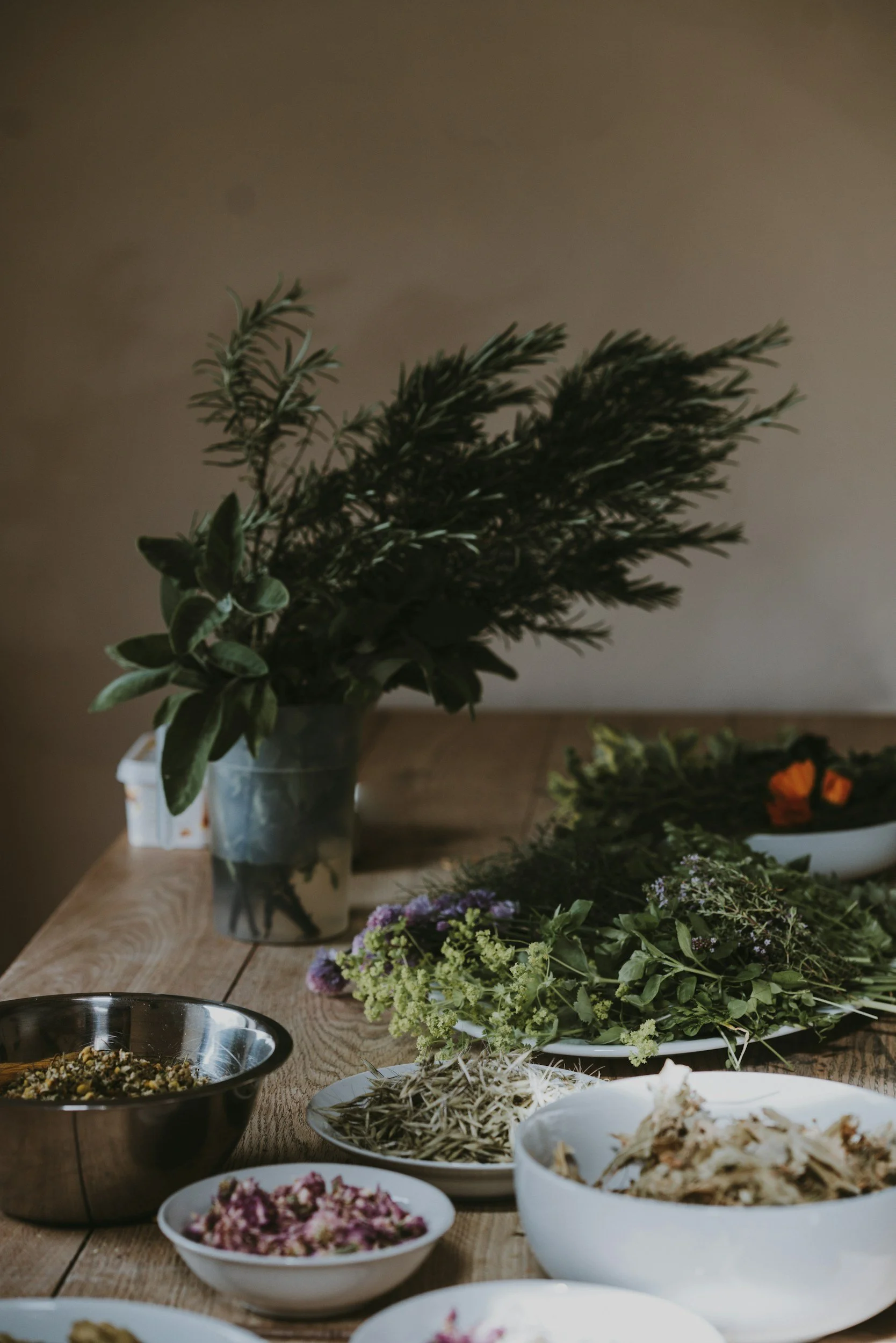
6. Indigenous Herbalists and Plant-Knowledge Specialists
This may become one of the most important specializations of all.
Igboland contains enormous botanical knowledge accumulated through generations. Much of that knowledge risks disappearing when knowledgeable elders die without transmitting it.
Future herbal specialists will need to become serious students of indigenous plants; their Igbo names, habitats, preparation traditions, cultural meanings, and historically documented uses.
At the same time, the modern herbalist must understand that traditional knowledge and modern clinical evidence are not automatically identical.
Where health claims are involved, responsible practitioners should welcome toxicology, pharmacology, dosage research, contamination testing, and modern medical knowledge.
Imagine what could emerge when ancestral botanical knowledge is preserved without rejecting scientific scrutiny.
That could become an extraordinary field.
7. Dibia Ogbanje
Another specialization that deserves deeper development is the Dibia Ogbanje.
Discussions of Ogbanje often concentrate almost entirely on children. But people who understand themselves through Ogbanje traditions do not cease having questions simply because they become adults.
Future specialists in this area could become knowledgeable not only about the relevant spiritual traditions but also about identity, family dynamics, trauma, emotional regulation, and psychological wellbeing.
That distinction is crucial.
A responsible practitioner should know when someone needs spiritual counsel and when they should also be encouraged to seek qualified mental-health or medical support.
Spiritual interpretation should never become an excuse for neglecting treatable conditions.
The strongest future practitioners will understand those boundaries.
8. Sacred Animal Husbandry and Food Specialists
This one may surprise people.
Traditional societies did not separate food, ecology, community, and spirituality as sharply as modern industrial societies often do.
There is room for specialists knowledgeable about traditional animal husbandry, ethical handling, ritual requirements surrounding particular animals, slaughter customs where applicable, food preservation, and community redistribution.
Their work could intersect with farming, animal welfare, food sovereignty, environmental sustainability, and cultural preservation.
The objective would be recovering an entire philosophy concerning the relationship between human beings, animals, food, gratitude, community, and the sacredness of life.
9. Dibia Uli
One of the specializations I find particularly exciting is what we might call Dibia Uli.
Imagine artists who understand design as a language connecting identity, symbolism, beauty, body, community, and spirit.
They might specialize in Uli-inspired body art, sacred design, visual storytelling, architecture, textiles, ceremonial environments, or personal symbolic expression.
Their role would sit somewhere between artist, cultural historian, designer, and spiritual practitioner. But serious knowledge would again be essential.
Uli cannot simply become an aesthetic pasted onto anything. Its visual language deserves study.
The practitioner must understand the cultural world from which the symbols emerge. The result could be an entirely new generation of Igbo sacred artists.
10. Death Workers and Transition Specialists
Modern society is remarkably uncomfortable with death. Our ancestors could not afford to be.
Death had rituals. It had specialists and required the participation of family and community. And the transition from physical life into ancestorhood was treated with seriousness.
A modern Igbo death worker could specialize in helping families navigate dying, mourning, funerary customs, remembrance, and the spiritual questions surrounding transition.
Such practitioners might work alongside families, healthcare professionals, funeral providers, and community elders rather than attempting to replace them.
They could help recover an Igbo philosophy of dying that modernity has increasingly pushed into the background.
Because how a civilization understands death tells you an enormous amount about how it understands life.
11. Maternal Care Specialists
Finally, I believe we will see renewed interest in traditional maternal knowledge.
Pregnancy.
Birth.
Postpartum recovery.
Nutrition.
Massage.
Infant care.
Family support.
Traditional maternal specialists once carried enormous bodies of practical knowledge, much of which has weakened through disrupted transmission.
There is great value in documenting and responsibly preserving that knowledge. But this is another area where discernment is essential.
Pregnancy and childbirth can become medically dangerous very quickly. The future traditional maternal specialist should therefore not position ancestral knowledge against obstetrics or emergency medicine.
The strongest model may be complementary —> Preserve what is beneficial from indigenous maternal knowledge while working intelligently alongside evidence-based modern healthcare.
That is how tradition can survive intelligently.
The Future Dibia Must Be a Serious Student
There is something all eleven specializations have in common. None of them should be approached casually.
If Dibias are to be understood as masters of applicable mystical knowledge, then mastery must actually mean something.
It requires years of learning, observation, practice, and mentorship where available.
Language.
History.
Ethics.
Self-discipline.
Community accountability.
And demonstrated competence.
Calling yourself a Dibia cannot substitute for becoming knowledgeable.
The future will need fewer people obsessed with spiritual titles and more people obsessed with developing useful knowledge.
You May Have to Study Where There Is No Teacher
This may be the hardest part for younger people who feel called toward these areas. You may search for someone practicing exactly what you feel drawn toward and find nobody.
Do not immediately conclude that your calling is illegitimate. Knowledge traditions can become fragmented.
Colonialism, religious change, migration, urbanization, and interrupted transmission have caused many specialized forms of indigenous knowledge to weaken or disappear.
Sometimes what remains is scattered among elders, oral histories, vocabulary, rituals, archival material, academic research, neighbouring communities, and family traditions.
Your work may therefore begin with fragments.
Study them.
Document them.
Compare them.
Learn Igbo deeply.
Speak with elders without assuming every elder knows everything.
Separate what can be historically demonstrated from modern interpretation.
And be courageous enough to say "I don't know" where evidence ends.
That intellectual honesty will be essential to rebuilding these traditions properly.
Re-emergence Does Not Mean Reenactment
Most importantly, recovering indigenous knowledge does not mean pretending we still live three hundred years ago.
Our ancestors created knowledge for the worlds they inhabited. We must do the same.
A Dibia practicing in the 21st century may use a smartphone. They may maintain a digital record, study psychology, collaborate with doctors, and understand neuroscience.
They may run a modern institution, publish research, and teach online. None of these things automatically makes their work less indigenous.
The deeper question is: What worldview organizes the knowledge?
If Igbo concepts of Chi, Ala, Ofo na Ogu, ancestors, nature, community, morality, destiny, reciprocity, and spiritual responsibility remain foundational, then modern tools can become instruments through which ancient principles find contemporary expression.
That is how living traditions survive, by knowing their foundations deeply enough to create from them.
Final Thoughts
There are probably forms of Dibia specialization our generation has not even remembered yet.
Some survive only in fragments, while some remain within particular families. Others may need painstaking reconstruction.
And entirely new specializations may eventually emerge as ancient Igbo philosophical principles encounter problems our ancestors never had to face.
That should excite and not frighten us.
If you feel genuinely drawn toward one of these areas, do not become discouraged simply because you cannot immediately find someone practicing it exactly as you imagine.
Begin with what is available.
Study.
Learn the language.
Find the fragments.
Respect existing practitioners.
Develop your craft.
Test your knowledge against reality.
Remain intellectually honest.
And keep working.
Because sometimes preserving tradition means receiving what your ancestors left behind.
But sometimes preserving tradition also means taking the principles they left behind and having enough courage to build what the next generation will need.

















Join Odinani Mystery School for access to Exclusive in-depth teachings on ancient Igbo wisdom and mystical sciences!