Stages of Recovery From Ara Agwu (Phase 1 of 4)
Recovery from Ara Agwu is not necessarily a straight journey.
There are periods of movement and periods of stillness. There are moments when clarity suddenly returns, followed by moments when a person feels as though they have somehow fallen backward into confusion again.
This is why recovery must be understood in stages.
When you understand the stage you are currently passing through, you are less likely to mistake a temporary condition for a permanent reality.
You begin to understand that where you are is not necessarily where you will remain.
Phase One of recovery consists of four progressive states which we will derive from an Afa Akpukpala framework:
AKWU → ODII → ATULUKPA → OFU
These four states describe a gradual movement from inertia into clarity, from coldness into warmth, from confusion into orientation, and from fragmentation toward unity of mind.
The guiding element throughout this phase is Water.
And the most important instruction of this phase is simple: Keep moving.
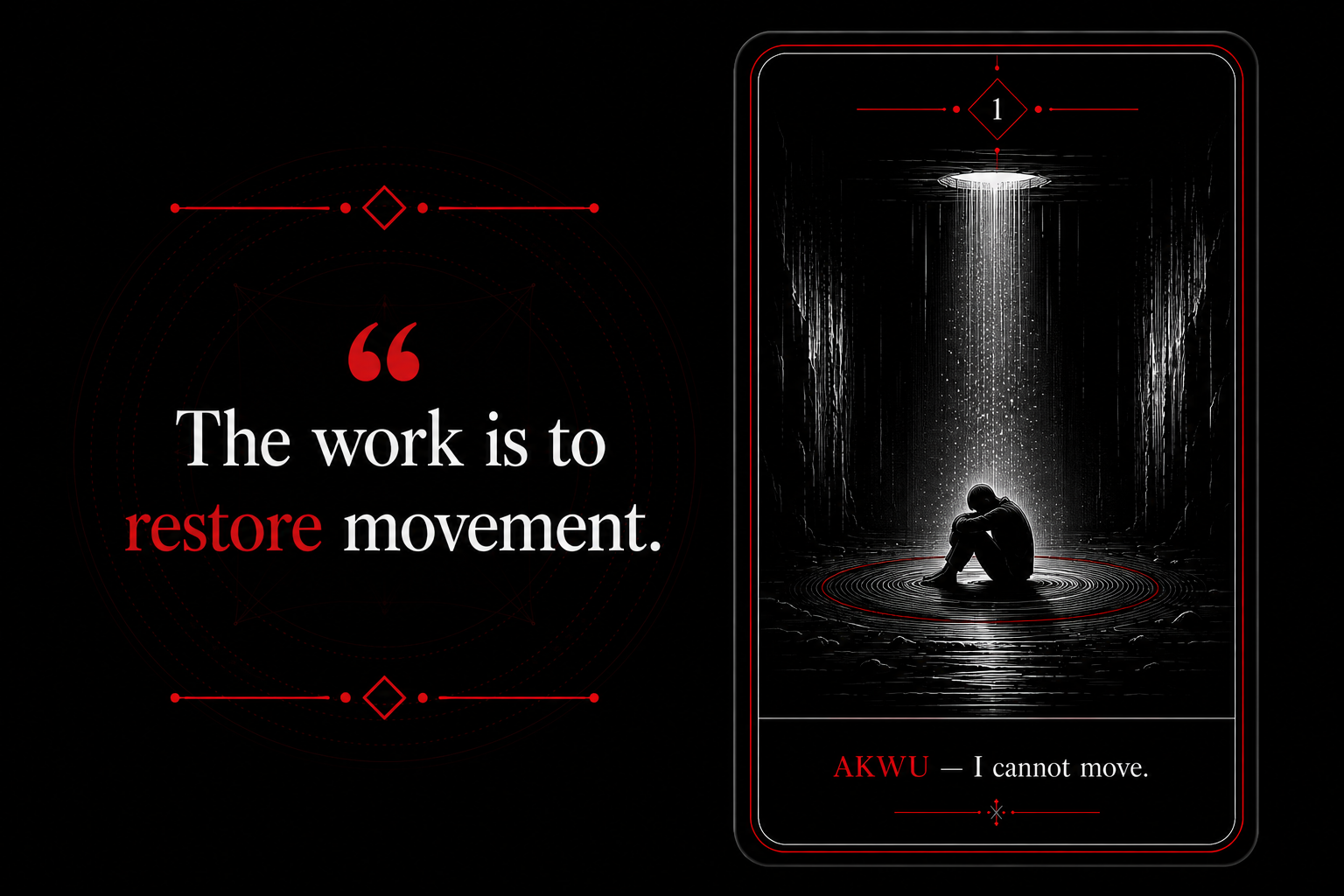
1. AKWU — Inertia
At this point, everything feels cold and at a standstill.
Akwu is the state of inertia.
There may be little desire to move, little enthusiasm for life, and sometimes very little internal sense of direction.
Things that once mattered may suddenly feel distant. Plans become difficult to execute. The future becomes difficult to imagine.
Even when you intellectually understand that something needs to change, you may struggle to generate enough internal momentum to actually change it.
This is an important distinction because sometimes the problem is not that you do not know what to do. You simply cannot get yourself to move.
That is Akwu. It is the experience of stagnation. And stagnation naturally produces coldness.
Think about water.
Water that stops moving for too long becomes stagnant. Things begin accumulating inside it. Its environment changes. What was once capable of flowing freely becomes trapped within its own condition.
Something similar can happen internally.
The longer a person remains completely inactive—physically, mentally, socially, spiritually—the heavier movement can begin to feel.
This is why the first medicine of Akwu is movement.
You may not understand everything yet. Move anyway. Walk. Clean your environment. Sit outside. Change rooms.
Visit somewhere different. Complete one small task or responsibility. Expose yourself to life again.
At this stage, enormous transformations are not always necessary.
Sometimes the smallest movement is spiritually significant because movement itself begins breaking the condition of inertia.
The objective is circulation, not speed.
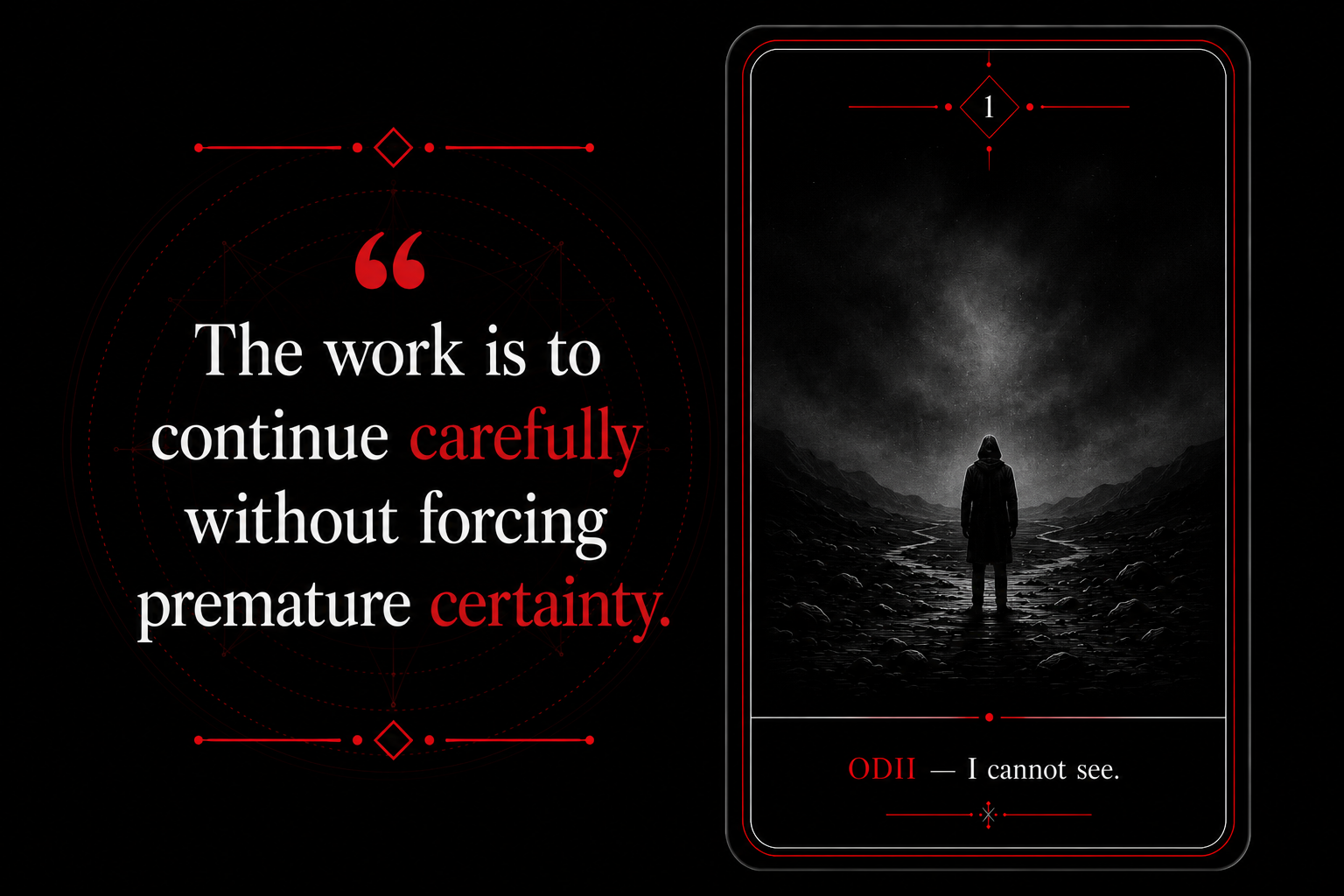
2. ODII — Darkness
At this point, the person is moving, but still struggling to see.
After inertia begins to loosen, one may enter Odii.
Odii is darkness.
This does not necessarily mean complete or literal darkness. It is often the strange sense of darkness experienced when something has ended internally, but whatever is supposed to replace it has not yet become visible.
You are no longer entirely where you were. But you do not yet know where you are going, and this can be immensely confusing.
Old beliefs may no longer make sense and old identities may feel foreign. Even your previous understanding of yourself may begin collapsing.
Yet there is not enough clarity to construct something new.
This is why Odii can feel like wandering through darkness, because you are dealing with the remnants of confusion while trying to rediscover orientation.
One of the greatest mistakes during this stage is demanding immediate certainty.
You want answers.
You want to know exactly what happened.
You want to know where everything is going.
You want someone, or something, to explain your life to you.
But sometimes clarity cannot be forced. Your eyes must first adjust to the darkness.
The lesson of Odii is therefore —> Do not confuse your inability to see with the absence of a path.
A path can exist before you are capable of recognizing it. Just continue moving carefully.
Observe, listen, and pay attention to recurring patterns. Do not make every confusing thought into a revelation, or translate every fear into a prophecy.
Allow reality to reveal itself gradually.
Odii requires patience because premature certainty can sometimes be more dangerous than temporary confusion.
3. ATULUKPA — Unknown Factors
At this point, you can see more clearly, but you are beginning to discover that not everything affecting you is immediately visible.
Atulukpa is the stage of unknown factors.
Here, one begins confronting attachments, entanglements, unresolved relationships, inherited patterns, unconscious habits, environmental influences, expectations, fears, obligations, and other variables that may still be shaping one's reality.
Some of these factors will be obvious. Others will not. This is why I call them unknown factors.
A person may sincerely want to move forward while remaining attached to something that continuously pulls them backward.
They may have physically left an environment but remain psychologically trapped inside it.
They may have ended a relationship but continue organizing their identity around the relationship.
They may consciously reject an old belief while unconsciously continuing to live according to it.
They may desire a new life while remaining emotionally dependent on the structures of the old one.
Atulukpa teaches us that leaving something is not always the same as becoming free from it.
Distance does not always translate to detachment. And awareness is not always liberation.
This stage therefore requires serious self-observation.
You must begin asking:
What am I still attached to?
What continues to influence me?
What repeatedly returns me to the same emotional condition?
What environments make me heavier?
What relationships repeatedly disturb my internal balance?
What habits keep recreating realities I claim I no longer want?
And perhaps most importantly: What am I refusing to see because seeing it would require me to change?
Not every unknown factor is spiritual in the supernatural sense. Some are psychological, relational, environmental, ancestral or cultural.
Some are also habits, unresolved responsibilities, and simply consequences that have not finished unfolding.
Wisdom requires us not to force every unknown into one explanation. Observe first. Name carefully.
Then disentangle yourself gradually from whatever prevents movement.
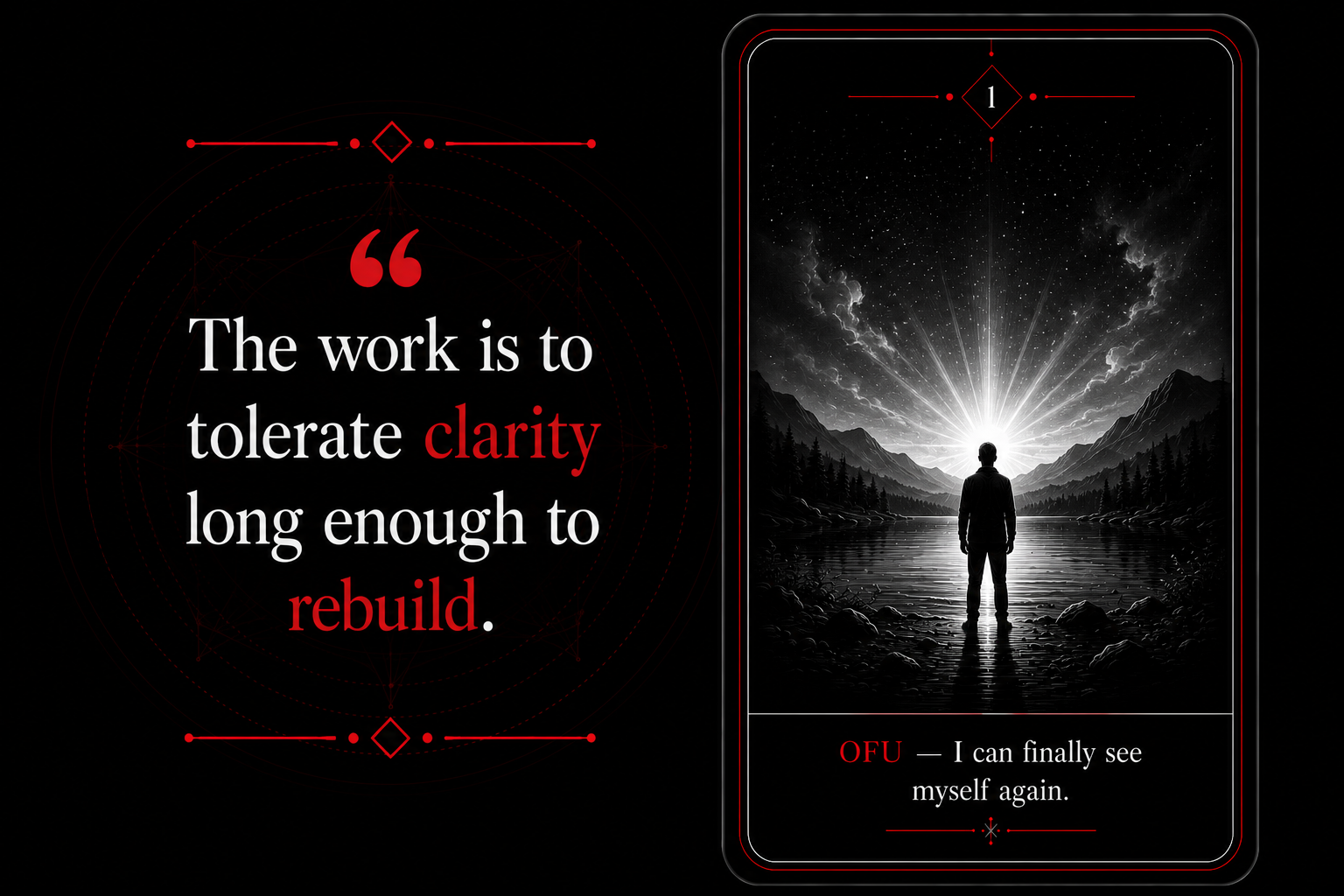
4. OFU — Unity of Mind
At this point, the scattered mind slowly begins becoming one again.
Ofu represents unity.
This is where clarity of thought gradually begins returning. Focus becomes easier. Your sense of purpose starts becoming visible again.
The many competing voices inside the mind begin losing their power, and something more coherent begins emerging.
You start knowing what matters. You begin recognizing what no longer belongs in your life. Your decisions become less chaotic. Your attention becomes less scattered. You slowly become capable of directing yourself again.
But Ofu can be deceptively difficult. Because sometimes clarity brings suffering.
When the fog disappears, you may finally see your reality exactly as it is. You may recognize how much time was lost. You may see relationships differently.
You may understand mistakes that cannot be undone, or recognize responsibilities you have neglected.
You may suddenly become painfully aware of the distance between your present reality and the life you know you should be living.
This creates one of the greatest dangers of Ofu, which is the internal dissatisfaction produced by clarity.
You can finally see. But you may not yet have the strength, resources, circumstances, or time required to immediately change everything you see.
That gap between awareness and transformation can produce immense internal suffering. And if a person cannot tolerate that discomfort, they may retreat. They may return to confusion because confusion was easier than responsibility.
Or return to stagnation because movement now demands too much.
They may also recreate old attachments because loneliness feels worse than entanglement. And so they fall backward: OFU → ATULUKPA → ODII → AKWU
This is why clarity must be accompanied by endurance.
You do not need to repair your entire life simply because you can finally see what needs repairing. Seeing clearly is already progress. Now take your time and build gradually.
The Guiding Element of Phase One: WATER
The guiding element throughout this first phase of recovery is Water.
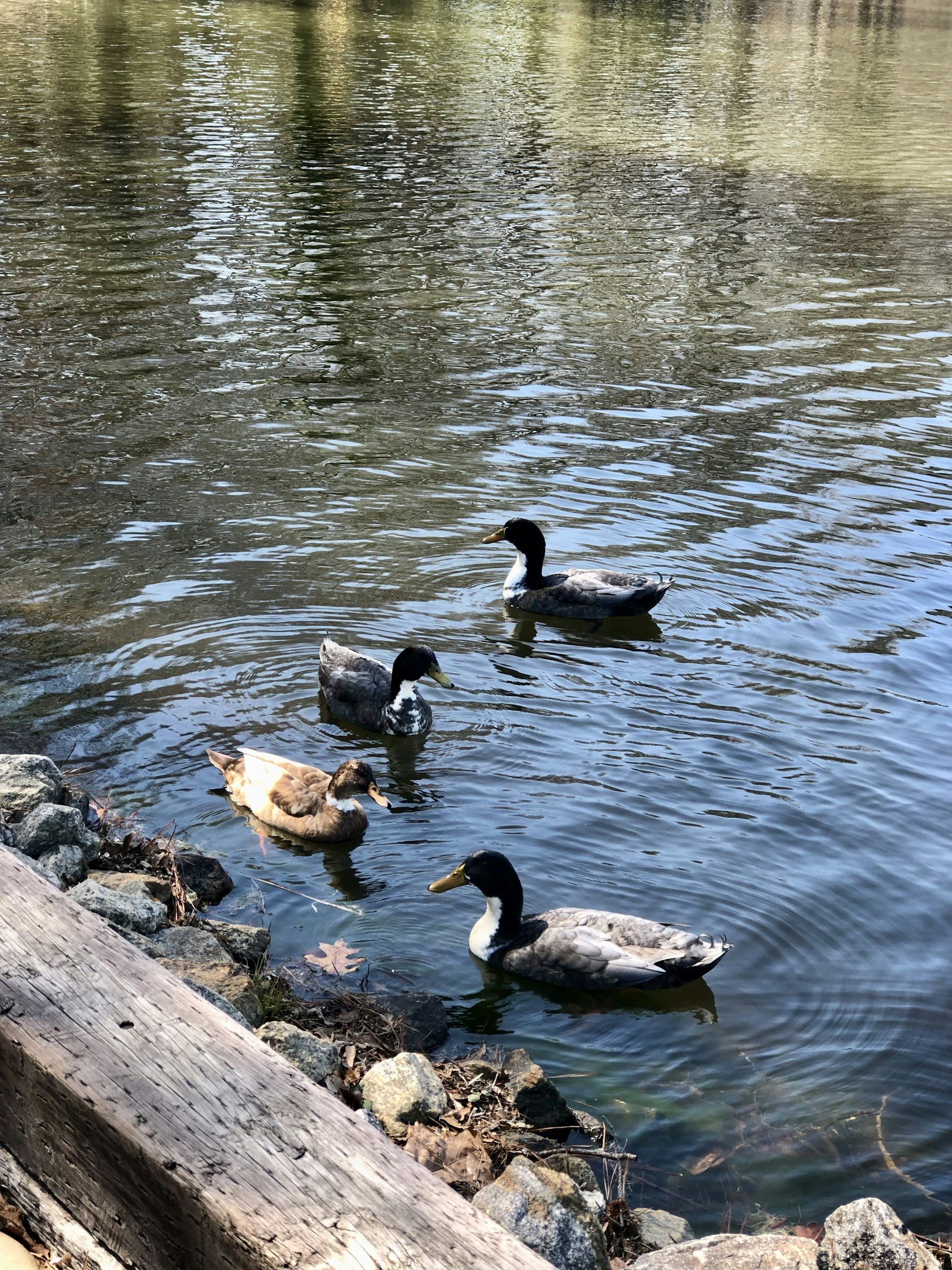
Water teaches movement and adaptation. It does not need to destroy every obstacle it encounters. Sometimes it moves around it or beneath it. Sometimes it waits or it gathers.
And when enough water gathers, what once appeared immovable can eventually be moved.
This is an important lesson during Phase One.
You do not need to fight everything. Sometimes you need to flow.
There may be situations you cannot immediately change. Flow around them. There may be questions you cannot immediately answer. Continue living while the answers develop.
There may be obstacles you currently lack the strength to remove. Find another route.
The objective during this phase is not to force life into submission, but to restore movement.
Because one of the greatest dangers during recovery from Ara Agwu is stagnation.
When the body stagnates, the mind can stagnate.
When the mind stagnates, confusion can deepen.
When life becomes too internally enclosed, reality itself can begin shrinking.
So move. Move physically, mentally, socially, creatively, and spiritually. Movement creates new information. New environments create new observations. New experiences create new reference points. And new reference points can gradually help the mind reorganize itself.
Water survives because it moves. You must learn to do the same.
Seek Warmth and Sunlight
Alongside Water, another important principle during this phase is warmth.
Akwu begins with coldness. Therefore, recovery requires the gradual restoration of warmth.
Whenever possible, spend time outside. Expose yourself to sunlight. Walk. Allow fresh air to touch your body. Interact with the natural world.
Do not remain unnecessarily enclosed in dark spaces for prolonged periods. The body is part of the spiritual experience.
Sometimes people become so focused on interpreting everything spiritually that they neglect the physical conditions influencing their state.
Your environment, sleep, movement, and exposure to nature matters. Even your daily routines matter. Your relationship with other human beings matters.
Recovery should not become an endless intellectual investigation into what went wrong. Sometimes you must stop analyzing the river and simply enter the water.
Live. Move. Experience life. Observe. Adjust. Continue.
The Four Movements of Phase One

The journey through this first phase can therefore be understood simply:
AKWU — I cannot move.
The work is to restore movement.
ODII — I cannot see.
The work is to continue carefully without forcing premature certainty.
ATULUKPA — Something is still holding me.
The work is to identify attachments, entanglements, and unknown variables.
OFU — I can finally see myself again.
The work is to tolerate clarity long enough to rebuild.
These stages may not always occur perfectly in sequence. A person may move forward and backward between them.
You may experience Ofu today and briefly return to Odii tomorrow. That does not necessarily mean all progress has been lost.
Recovery can be like that atimes. It moves, circles, encounters resistance, changes direction. But if it continues moving, it eventually finds somewhere to go.
This is the central lesson of Phase One: Do not become stagnant.
When confused, move carefully.
When overwhelmed, simplify.
When cold, seek warmth.
When isolated, reconnect with life.
When clarity arrives, do not run from what you see.
And when you discover that something still has a hold on you, observe it carefully enough to understand how to loosen yourself from it.
You do not have to understand the entire journey before taking the next step. The river does not need to see the ocean before it begins flowing toward it, innate alignment will eventually get it there.
It only needs somewhere to move. So keep moving. Jisie ike.







Recommended Resources:
Nne Agwu: The Totality Sum Form of Agwu | Odinani Mystery School
Ebo Agwu: The Particularized Form of Agwu | Odinani Mystery School
Multiple Ways We Can Understand Agwu from Afa | Odinani Mystery School
Agwu Ishi Ora (The Head of All Agwu) | Odinani Mystery School
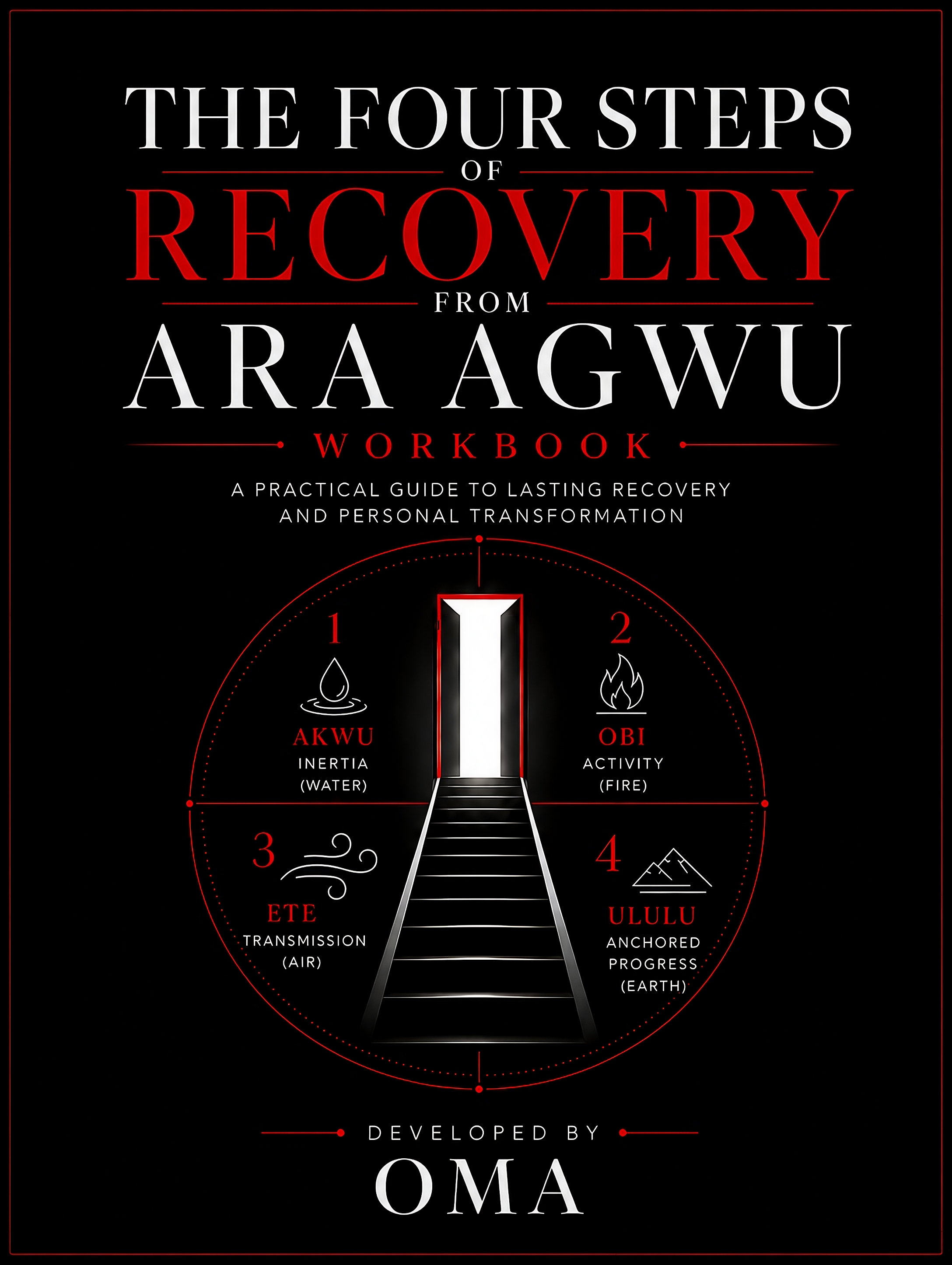
The Four Steps of Recovery From Ara Agwu (Workbook)
A practical reflection and recovery workbook designed to help seekers navigate the often complex journey of healing from Ara Agwu through a structured yet deeply personal approach.

Join Odinani Mystery School for access to Exclusive in-depth teachings on ancient Igbo wisdom and mystical sciences!