By Phase Three, one has moved through stagnation, confusion, entanglement, purposeful activity, journeying, contraction, and illumination.
They have learned how to move, how to recognize their path, and how to survive moments of uncertainty without immediately abandoning themselves.
But recovery is not complete simply because a person has received insight. That insight must become reality. Understanding must become embodiment.
The internal changes produced by the earlier phases (Phase 1 and Phase 2) must now become visible in the way a person thinks, acts, creates, chooses, relates, and lives.
This is the work of Phase Three. The four stages of this phase, as derived from Afa Akpukpala framework, are: ETE → OKARA → OSE → IJITE
These stages describe the movement from transmission into astrideness, from astrideness into potency, and from potency into a deeper state of being.
The guiding element of this phase is Air.
Air represents communication, transmission, perspective, movement, intelligence, breath, spaciousness, and freedom.
The central instruction of this phase is: Allow what has changed within you to change the world around you.
1. ETE — Transmission
What has been transformed internally must now be transmitted into reality.
Ete is the stage of transmission. At this juncture, one has transcended Phase Two and should have completed enough inner work to begin expressing their transformation more naturally.
The lessons are no longer merely ideas and the changes are no longer confined to the inner world. Something must now move from within to without.
This is transmission.
A person may begin communicating more clearly.
Their decisions may become more direct.
Their work may begin reflecting deeper conviction.
Their relationships may reorganize.
Their environment may change.
Their creativity may intensify.
Opportunities may begin appearing that seem more aligned with their emerging identity. The person begins transmitting who they have become into the structure of their life. This can sometimes lead to sudden and astronomical changes.
A life that appeared stagnant for years may begin changing within months. Someone who struggled to make decisions may suddenly act with remarkable certainty.
A person who felt disconnected from purpose may begin producing meaningful work at a pace that surprises even them.
This does not necessarily mean magic has occurred in the simplistic way people often imagine it. What has changed is simply the relationship between the conscious and unconscious mind.
Earlier in recovery, the unconscious may have felt chaotic, inaccessible, threatening, or overwhelming.
At Ete, the person becomes more capable of receiving intuitive guidance from deeper levels of self and translating that guidance consciously.
What was previously buried or unclear begins becoming usable. A feeling becomes insight. Insight becomes decision. Decision becomes action. Action becomes reality.
This is how transmission works.
The internal world begins communicating more efficiently with the external world. But this stage requires a sense of responsibility.
Not every impulse is intuitive guidance. Nor is every strong emotion a revelation. And not every unexpected idea should be acted upon immediately.
A mature practitioner must learn to distinguish between intuition, desire, fear, projection, memory, and compulsion.
The purpose of inner work is to understand oneself well enough to know which internal movements deserve expression.
At Ete, transmission should become more refined.
2. OKARA — Astrideness
You may feel established in a new reality while still remaining partly connected to the old one.
Okara is astrideness. To be astride is to occupy two positions at once. It is to have one foot here and another foot somewhere else.
This perfectly describes an important reality of Phase Three.
Despite all the progress that has already been made, the person must remember that they are still recovering.
There may be periods when everything appears to be working. Life feels meaningful. The path feels clear. The future feels open. Then, without warning, uncertainty may return.
The person may suddenly feel neither fully here nor there. One part of them feels capable of living an ordinary, productive, grounded life. Another part remains intensely pulled toward Agwu, mystery, spiritual depth, and experiences that may not fit comfortably within what society calls normal.
This is astrideness, it does not automatically mean something has gone wrong. It is the reality of occupying two dimensions of oneself at once.
Many people make the mistake of believing they must completely reject one aspect of themselves in order to recover.
Some believe they must abandon their spiritual sensitivity to live a functional life. Others believe they must reject ordinary life in order to honor their Agwu.
Both positions may create unnecessary conflict.
The truth is that these parts of the self can coexist. One can feel deeply called toward mystery while also wanting stability.
One can value spiritual experience while also valuing work, family, health, community, creativity, and ordinary human joy.
One can possess an intense spiritual nature without allowing that intensity to destroy the rest of life. Okara teaches coexistence.
The ordinary can become sacred when approached with awareness, and vice versa. You do not always have to choose between one or the other.
Preparing food, working, resting, caring for the body, maintaining relationships, and earning a living, can all be sacred.
Living what appears to be a normal life does not necessarily mean betraying your spiritual nature.
Sometimes learning to live normally is one of the most impactful spiritual accomplishments a person can achieve.
The challenge of Okara is learning not to panic when the tension returns. You may feel certain today and unsure tomorrow. Keep moving.
You may feel spiritually expanded one week and deeply ordinary the next. Keep moving.
You may feel that your life is finally stabilizing, then experience a moment that reminds you of how complicated the journey has been. Keep moving.
Astrideness is a transitional spiritual reality.
3. OSE — Potency
Everything you have learned begins feeding your capacity to create change.
Ose represents potency.
By this stage, the experiences of the earlier phases begin gathering into usable power.
The confusion taught observation.
The stagnation taught movement.
The entanglements taught discernment.
Purposeful activity taught direction.
Journeying taught trust.
Contraction taught endurance.
Enlightenment taught release.
Transmission taught expression.
Astrideness taught coexistence.
None of these lessons are wasted. They now become potential. But potential is not the same thing as accomplishment.
A seed is potent because it contains the possibility of a tree. That does not mean the tree has already appeared.
Potency refers to capacity. It is the growing ability to act, influence, build, foresee, create, transform, and actualize.
At Ose, a person may become increasingly capable of achieving their dreams or producing the transformation they have long desired.
They may possess more courage, clarity, discipline, emotional range, insight into people and situations. More patience with complexity, and ability to anticipate consequences.
But perhaps the greatest gift of Ose is perspective.
The person now sees life differently because they have paid for that perspective through experience. Their view of life is no longer based entirely on theory. It has been earned.
They may understand suffering or success differently. They may recognize how quickly circumstances can change.
They may become less judgmental because they understand how easily the mind can become disoriented.
They may become more compassionate without becoming naive.
They may become more cautious without becoming fearful.
They may become more spiritually open without becoming easily deceived.
This earned perspective can become a powerful instrument for positive change. But only if the person chooses to use it.
Pain does not automatically produce wisdom. Neither does insight automatically produce character. A person can survive difficult experiences and still refuse to learn from them.
Ose presents a choice:
Will you use your expanded capacity?
Will you build with what you now understand?
Will you apply your foresight?
Will you use your perspective to create something better?
Will your recovery benefit only you, or will it improve how you relate to the world around you?
Potency becomes meaningful when it is directed. Otherwise, it remains unused possibility.
4. IJITE — Being
You are no longer constantly searching for yourself. You have begun to inhabit yourself.
Ijite represents being. At this stage, the person becomes clearly aware of who they are. There is greater coherence around identity.
The spiritual path feels less fragmented. And earthly purpose feels more understandable. The person becomes increasingly certain of their own direction.
This does not mean every question has been answered. Instead, it means the absence of an answer no longer threatens the foundation of the self.
That distinction is important.
Earlier in recovery, uncertainty may have felt dangerous. A difficult question could destabilize everything. A confusing experience could produce a complete loss of direction.
At Ijite stage, the self has become more stable. The person can encounter mystery without losing themselves inside it. They can experience disagreement without immediately doubting their path.
They can be misunderstood without feeling compelled to explain every aspect of their identity. They can change their mind without feeling that their entire existence has become false. They can remain open while still being centered.
This is being. It is the full embodiment of self.
You know what matters to you. You know what your experiences have taught you. You know what kind of life you wish to build, what you can tolerate and what you cannot.
You know which parts of yourself require discipline and which parts require compassion. You begin to understand the difference between your spiritual identity and your social image. And because of this, there is less pressure to perform the self for others.
You simply become.
This is one of the most stabilizing experiences in recovery.
When a person no longer has to search constantly for who they are, energy becomes available for life itself.
The Guiding Element of Phase Three: AIR
The guiding element of Phase Three is Air.
Air is movement without heaviness.
Air carries sound and scent.
Air moves heat.
Air transmits.
Air connects distant places.
Air is invisible, yet its presence can be felt through everything it touches. This makes Air the natural element of Ete, Okara, Ose, and Ijite.
At Ete, Air transmits inner change into the external world.
At Okara, Air teaches spaciousness between seemingly opposing parts of the self.
At Ose, Air provides perspective and foresight.
At Ijite, Air allows the person to inhabit being without becoming rigid.
Air teaches us that freedom requires space. Without space, there can be no breath. Without breath, there can be no sustained life.
Phase Three therefore asks the person to create more internal and external space.
Space from old obligations, from people who insist on defining them through their past, from compulsive self-explanation, from unnecessary conflict, from every burden that makes breathing difficult.
This means learning which responsibilities are truly yours.
Lean Into Levity
The experiences connected to Ara Agwu can carry enormous gravity.
There may have been fear, isolation, confusion, suffering, shame, spiritual pressure, misunderstanding, or the collapse of an earlier identity.
These experiences are serious.
But seriousness cannot become the only language through which a person understands themselves.
Phase Three requires levity. Levity does not mean pretending nothing painful happened. It does not mean turning suffering into entertainment.
Levity is the ability to become light enough that the weight of experience does not crush the spirit. It is the capacity to laugh again. To enjoy ordinary moments. To rest without guilt. To play, to create without forcing every creation to carry a spiritual message.
To speak about difficult experiences without becoming consumed by them. To recognize that not every moment must become an intense revelation.
Sometimes food is simply food, laughter is simply laughter. Sometimes the deepest sign of recovery is that you are capable of enjoying life without asking what the enjoyment means.
Air teaches lightness.
A person cannot remain in constant contact with gravity without eventually becoming exhausted. There must be moments when lightheartedness is allowed to be the primary experience.
Freedom Without Grounding Can Become Instability
Although Air is the guiding element of this phase, grounding becomes more important than ever. This may sound contradictory. I can assure you it is not.
The more open, intuitive, imaginative, free, and spiritually sensitive a person becomes, the more they need stable structures.
Air without grounding scatters. Freedom without responsibility leads to chaos. Intuition without observation inspires delusion.
The closer one moves toward the final phase of recovery, the more important it becomes to maintain a stable relationship with ordinary reality.
Eat properly.
Sleep properly.
Maintain your environment.
Honor commitments.
Take care of the body.
Handle money responsibly.
Keep trustworthy relationships.
Work.
Rest.
Create routines.
Pay attention to consequences.
Do not use spirituality as an excuse to avoid life. Grounding gives spiritual experience meaning.
A tree rises into the air because its roots remain inside the earth. Without strong roots, greater heights becomes dangerous.
The Four Movements of Phase Three
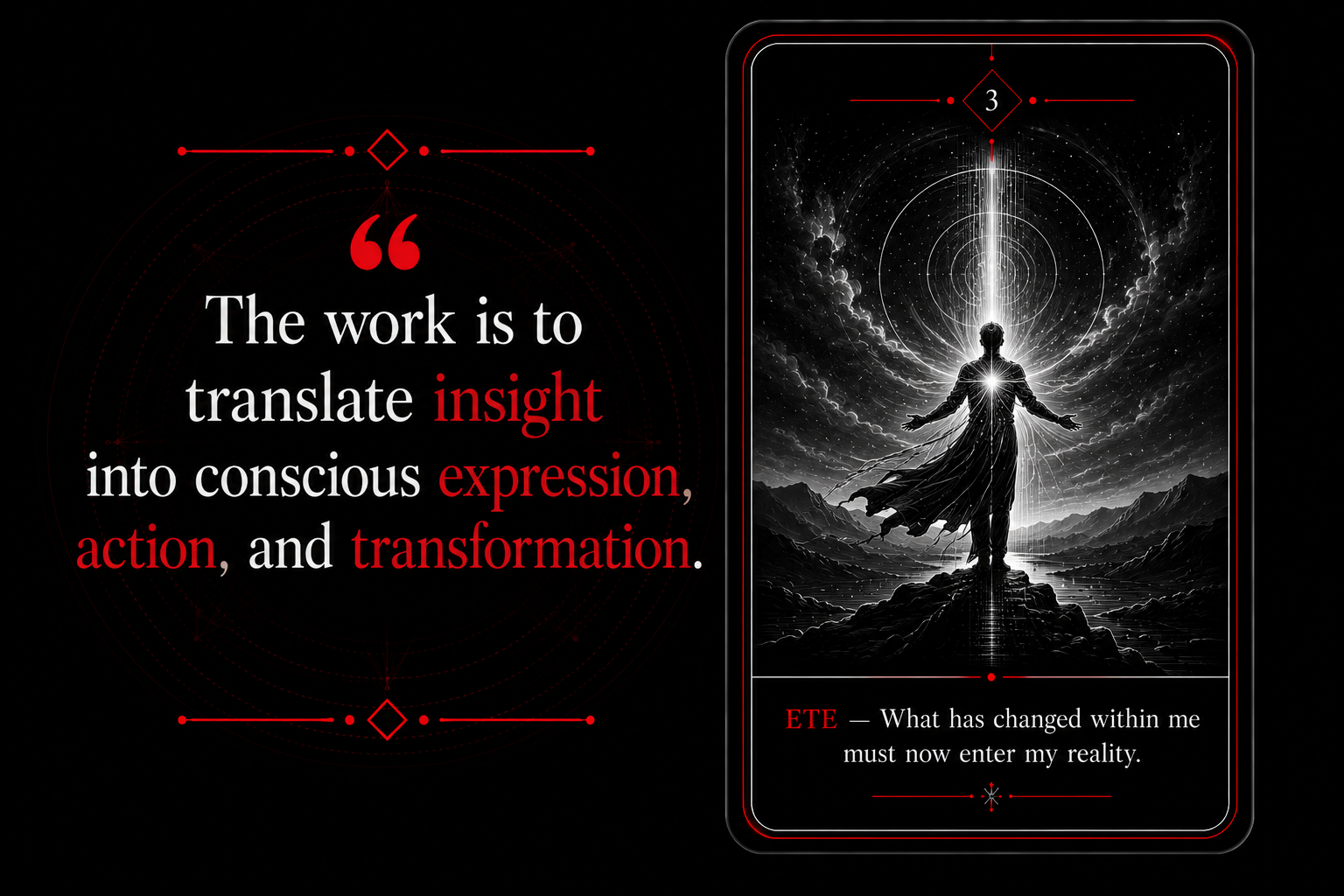
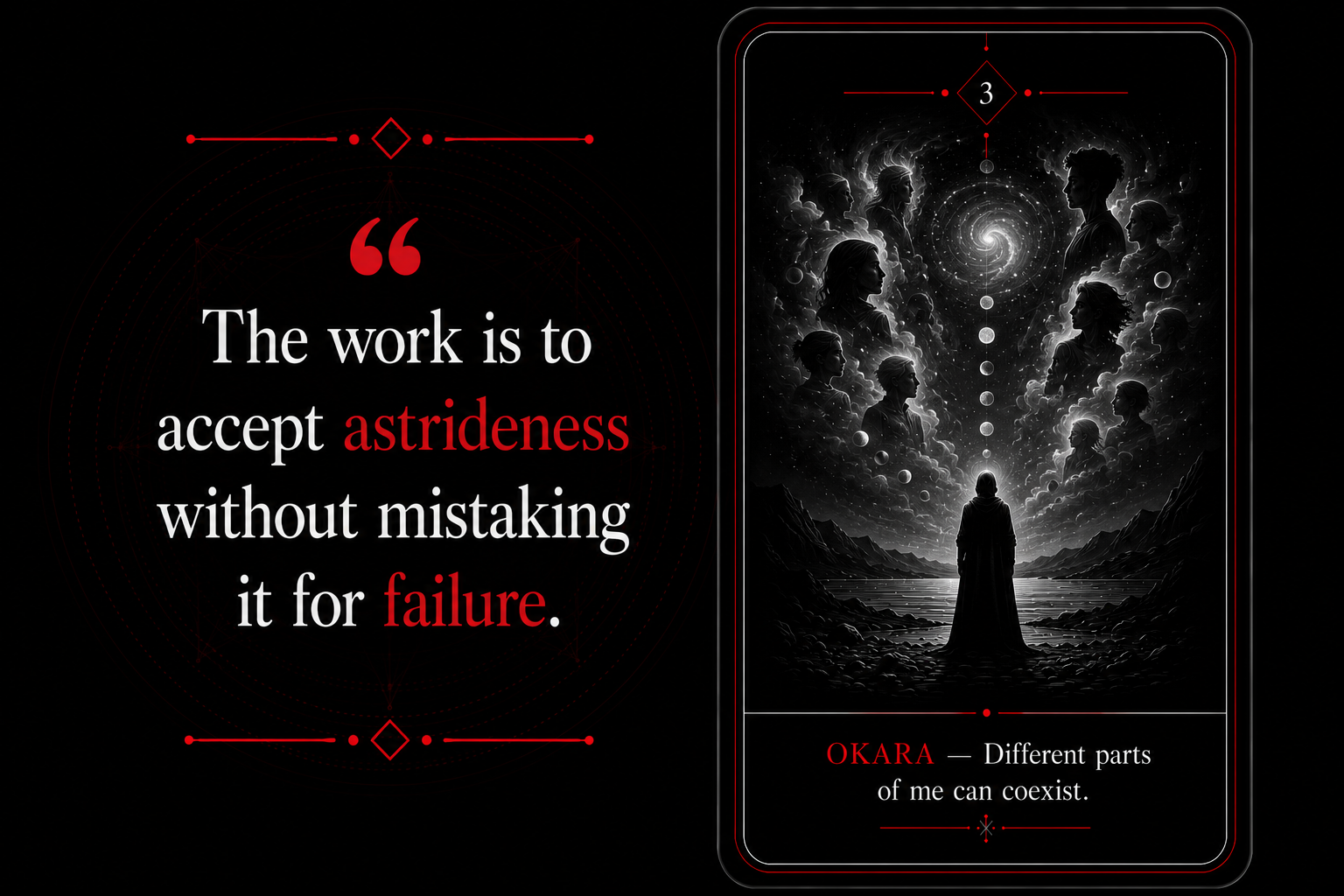
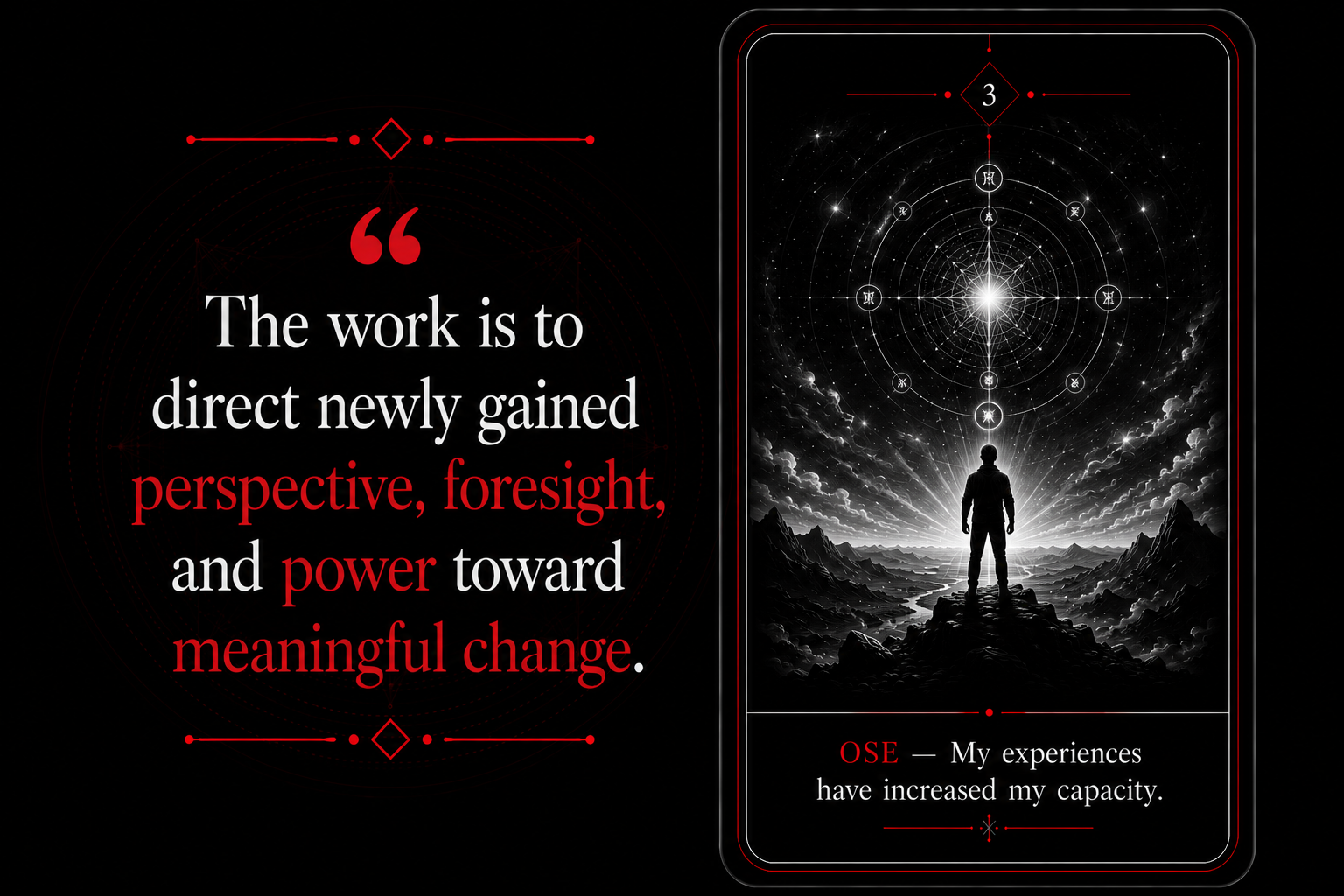
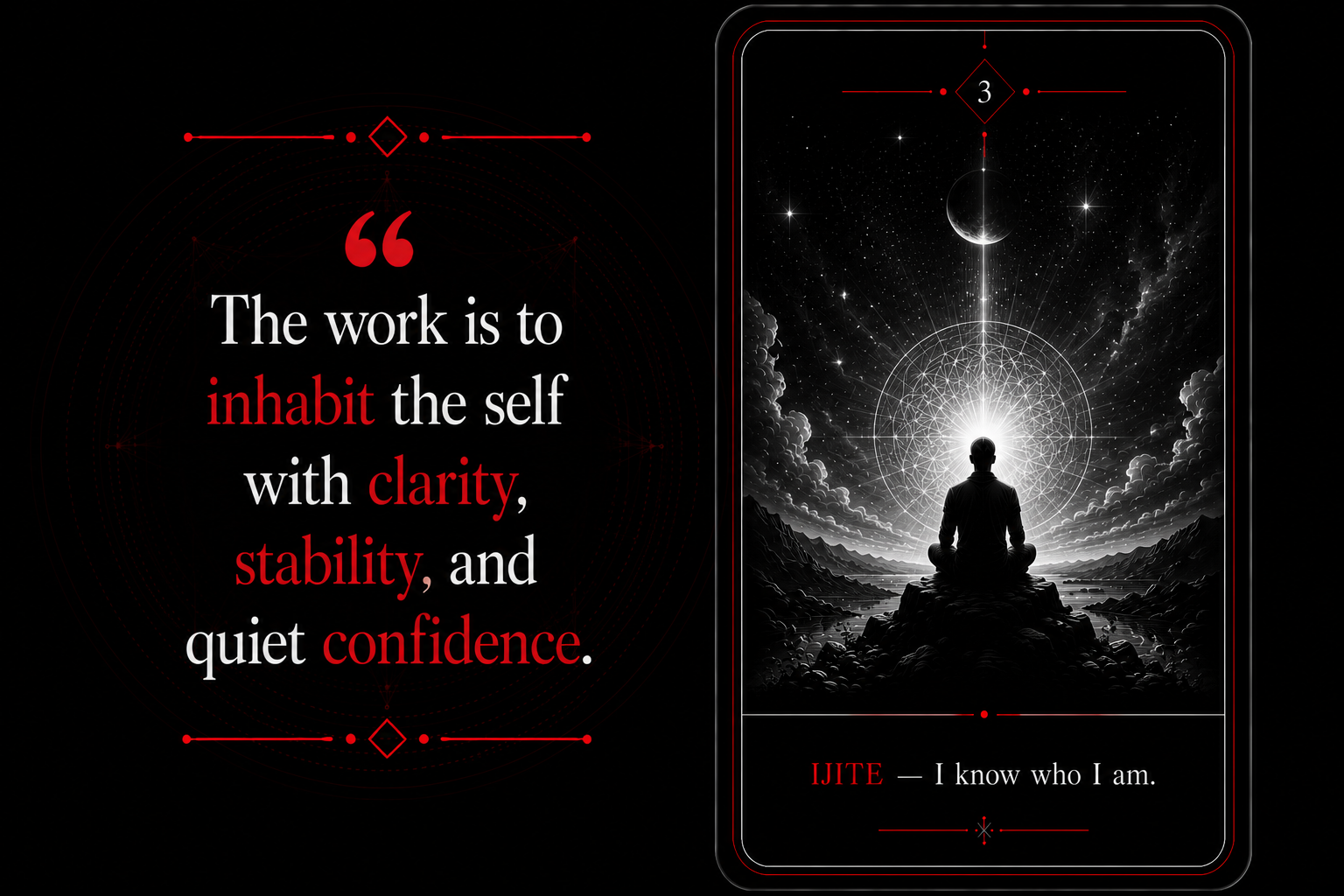
The progression of Phase Three can be understood simply:
ETE — What has changed within me must now enter my reality.
The work is to translate insight into conscious expression, action, and transformation.
OKARA — Different parts of me can coexist.
The work is to accept astrideness without mistaking it for failure.
OSE — My experiences have increased my capacity.
The work is to direct newly gained perspective, foresight, and power toward meaningful change.
IJITE — I know who I am.
The work is to inhabit the self with clarity, stability, and quiet confidence.
Together, these movements represent a shift from recovery as an internal process into recovery as a lived identity.
At this stage, it is no longer enough to know that you have changed. Your life must begin reflecting the evidence.
To Sum It Up
The central lesson of Phase Three is to:
Allow life to move.
Allow your identity to emerge.
Allow spiritual insight to become practical action.
Allow opposing parts of yourself to coexist without constantly forcing one to defeat the other.
Allow your perspective to expand.
Allow yourself to become lighter.
But remain grounded.
The purpose of freedom is to move with clear direction. You are not required to become or return to exactly who you were before Ara Agwu took hold.
Recovery does not always return a person to their former life. Sometimes it reveals that the former life was too small or just not what was needed for your path.
The person who emerges may be more sensitive, more aware, more complex, more spiritually open, and more conscious of forces that others easily ignore.
The task is to help this version of self live well. Transmit what you have learned. Accept the tension of standing between worlds. Use your growing potency carefully. Become secure in your being, and stay grounded.
Allow the wind which never blows in vain to carry forward what no longer needs to remain trapped inside you.
Jisie ike.







Recommended Resources:
Nne Agwu: The Totality Sum Form of Agwu | Odinani Mystery School
Ebo Agwu: The Particularized Form of Agwu | Odinani Mystery School
Multiple Ways We Can Understand Agwu from Afa | Odinani Mystery School
Agwu Ishi Ora (The Head of All Agwu) | Odinani Mystery School
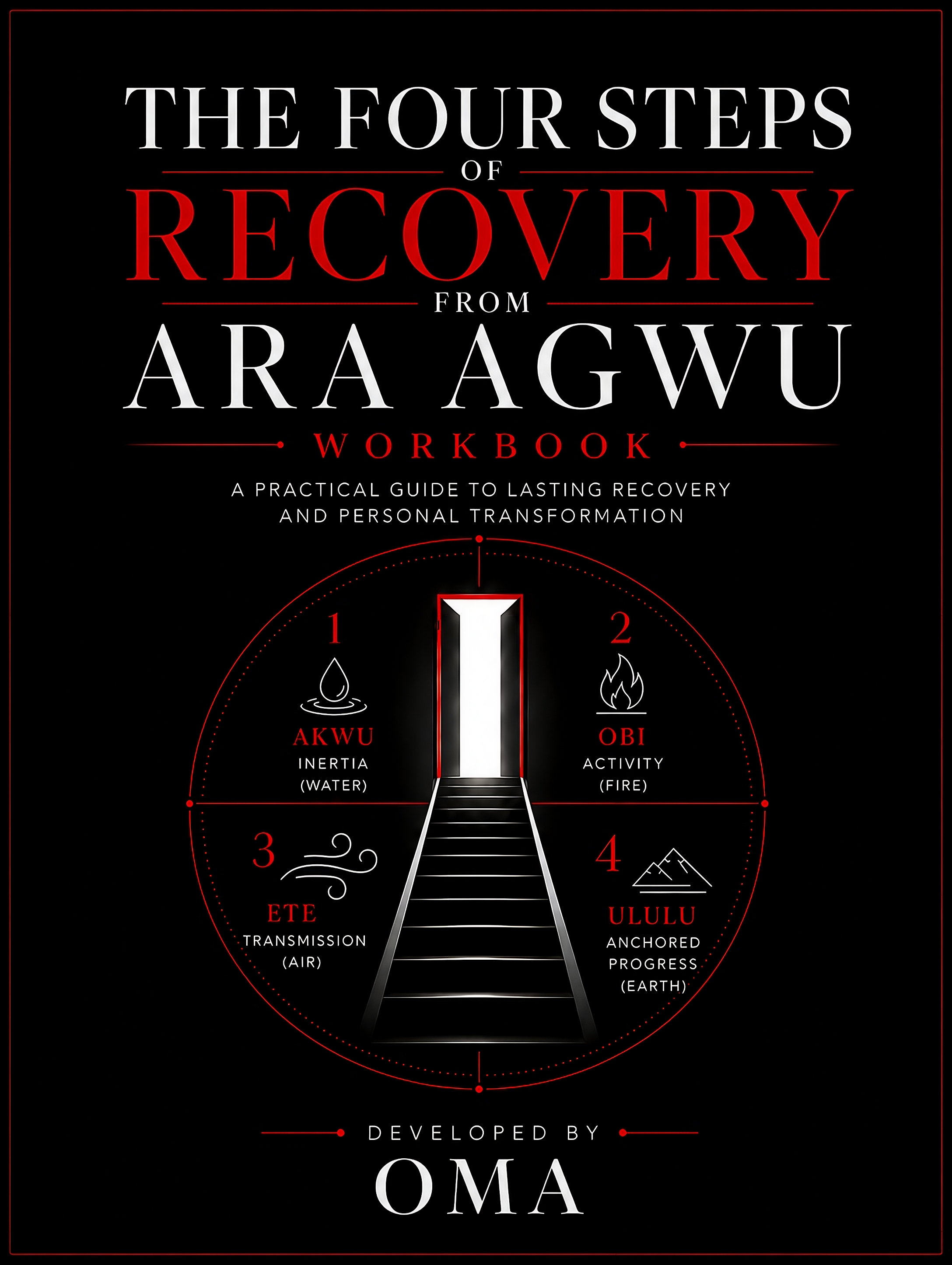
The Four Steps of Recovery From Ara Agwu (Workbook)
A practical reflection and recovery workbook designed to help seekers navigate the often complex journey of healing from Ara Agwu through a structured yet deeply personal approach.

Join Odinani Mystery School for access to Exclusive in-depth teachings on ancient Igbo wisdom and mystical sciences!