There is something remarkably disruptive about the life of Professor John Anenechukwu Umeh. He complicates a distinction many people have been taught to accept, that deep participation in Igbo spirituality belongs on one side of life, while modern scholarship, professional achievement and intellectual sophistication belong on the other.
Professor Umeh’s life suggests that this division is far less natural than we imagine.
Born on 3 October 1934 in Nnobi, in present-day Idemili South Local Government Area of Anambra State, Prof. Umeh became an accomplished academic and estate management scholar. He is described as the first professor of estate management in Africa and Asia, and his academic and professional qualifications include B.Sc. and M.Sc. degrees in Estate Management from London, M.A. status at Pembroke College, University of Cambridge, as well as fellowships and professional distinctions including FRICS (UK), FRVA (UK), FNIVS (Nigeria) and RSV (Nigeria).
His career took him through some of the most respected academic environments in Nigeria and Britain. At the University of Nigeria, he served as Dean of the Faculty of Environmental Sciences and later as Deputy Vice-Chancellor responsible for the Enugu Campus. His international academic engagements included appointments as a visiting professor at the University of Strathclyde in Glasgow and the University of Aberdeen, as well as time as a visiting scholar in the Department of Land Economy at the University of Cambridge.
He has also received numerous honours, including Nigeria's national honour of Officer of the Order of the Federal Republic (OFR).
That would already make for an extraordinary career. But it is not the most interesting part of Professor Umeh's story.
The Modern Dibia
Professor Umeh is also well established as an authority in the study and exposition of Igbo spirituality and Dibia knowledge. Among his best-known works are After God Is Dibia, Volumes 1 and 2, and The March of Igbo Civilization, Volumes 1 and 2.
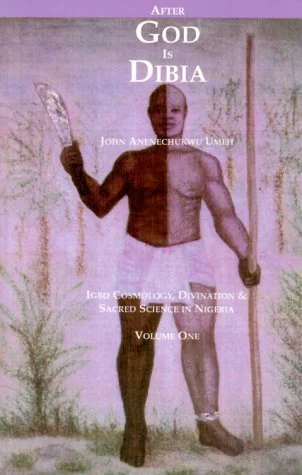
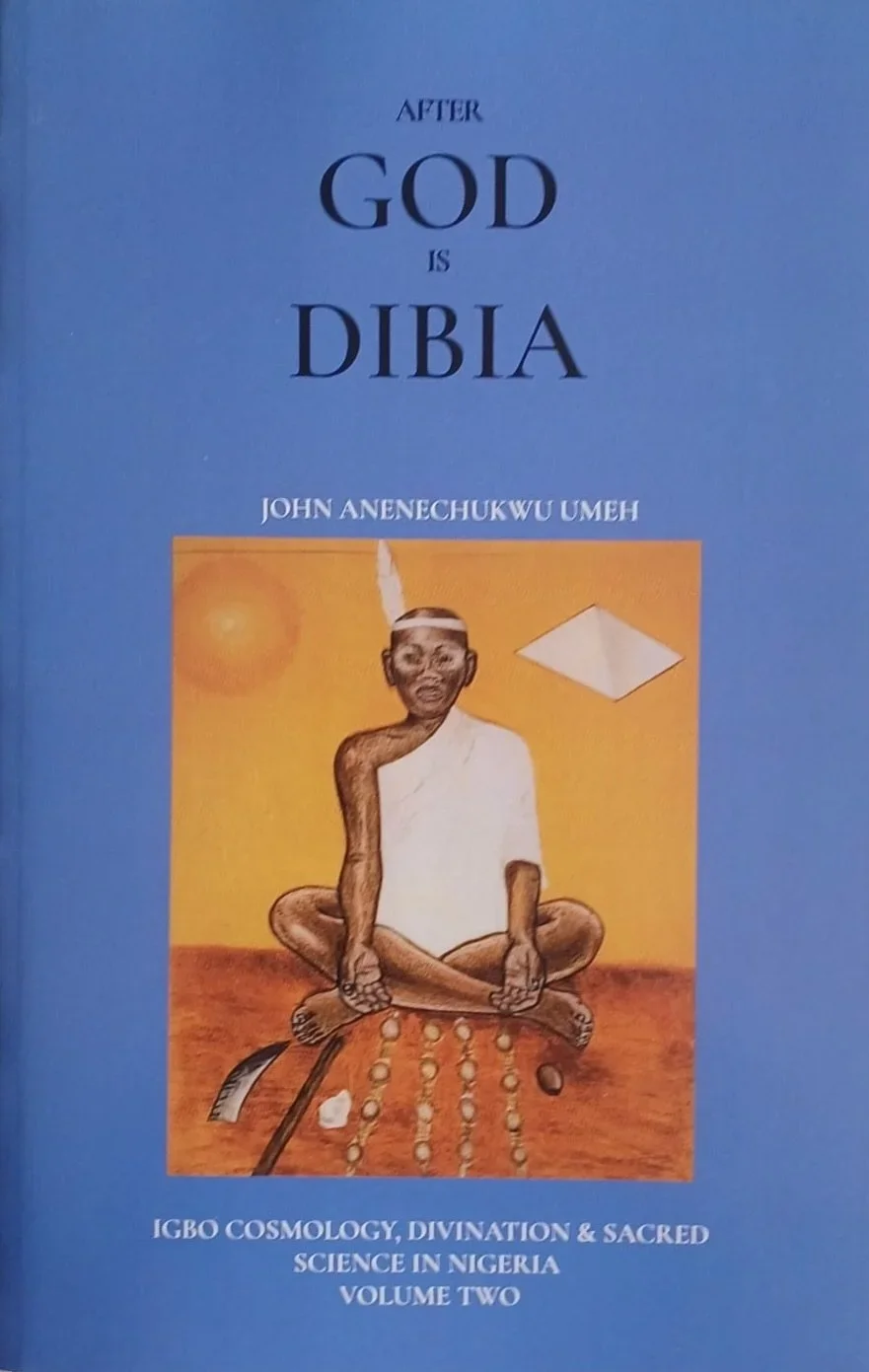
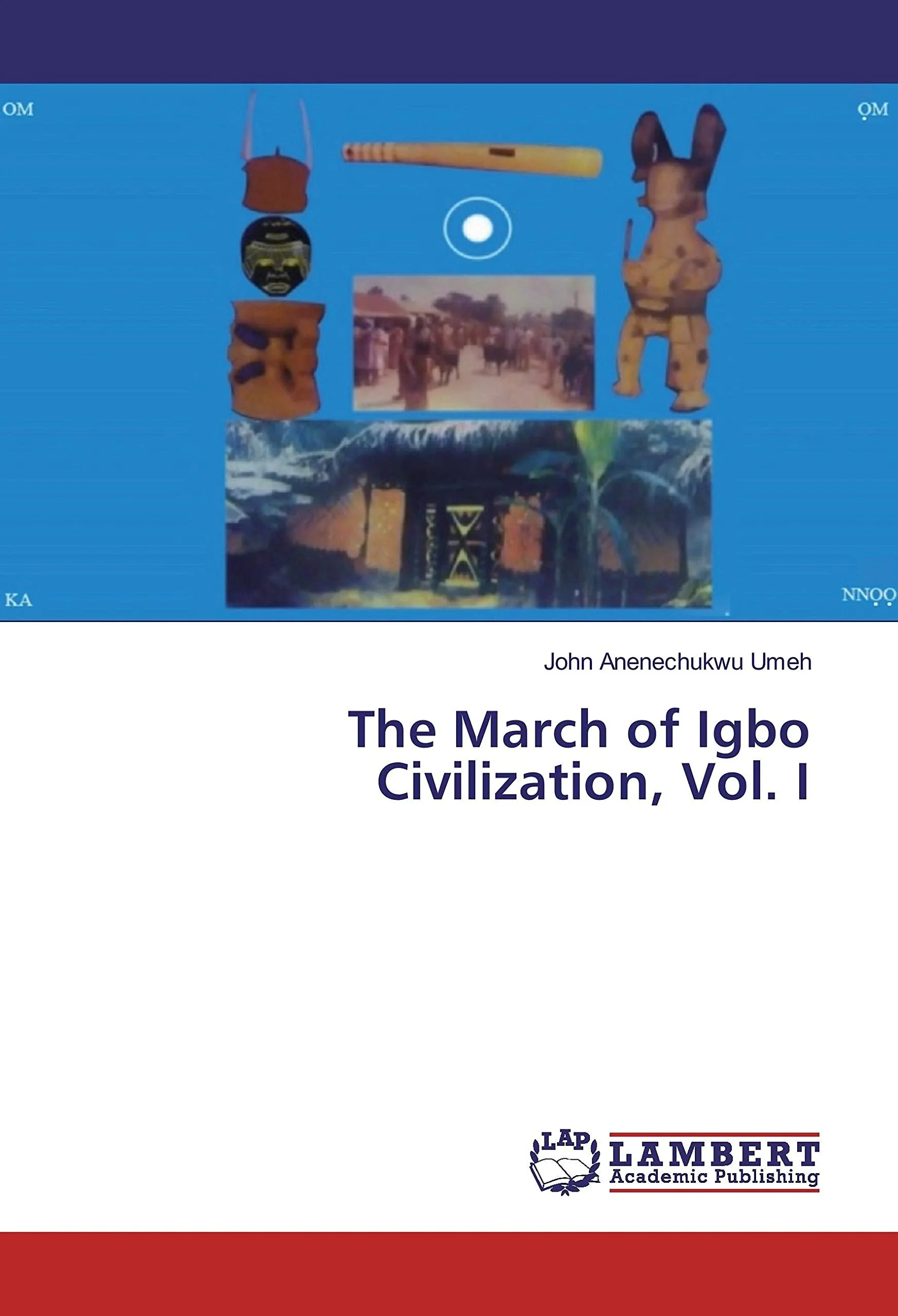
The significance of this combination deserves more attention.
For generations, Igbo traditional knowledge has often been positioned as the intellectual opposite of formal education. The educated African was expected, implicitly or explicitly, to demonstrate modernity by distancing himself from the knowledge systems of his ancestors. Traditional spirituality became something to practice discreetly, reject publicly, or describe from the safe distance of anthropology.
Professor Umeh presents a very different possibility.
Here is a man who could operate within modern professional institutions at a remarkably high level without concluding that seriousness required cultural amnesia. Cambridge did not prevent him from thinking about Igbo civilization. Estate management did not make Dibia knowledge intellectually embarrassing. International professional recognition did not require him to treat indigenous spirituality as something beneath scholarly consideration.
That may be one of the most important things younger Dibias and students of Igbo spirituality can learn from him.
Dibiahood does not have to be an excuse for intellectual isolation. If anything, it should produce the opposite impulse: curiosity.
A person entrusted with indigenous knowledge should want to understand history, medicine, ecology, philosophy, psychology, technology, law, language and the changing society around them. Modern education does not automatically destroy traditional knowledge. Properly approached, it can provide additional tools with which to examine, articulate, preserve and sometimes challenge that knowledge.
The problem begins when either side demands ignorance of the other.
Dibias Should Also Become Authors
There is another lesson in Prof. Umeh's legacy that is perhaps even more urgent: knowledge that is never documented becomes dangerously dependent on memory.
Igbo indigenous traditions have powerful oral foundations. Oral transmission has preserved enormous bodies of knowledge across generations. But the modern world has changed the conditions under which knowledge survives.
Communities disperse. Languages weaken. Elders die. Religious conversion changes attitudes toward ancestral practices. Younger generations migrate into cities and abroad. Practices that once existed within an intact chain of teacher, apprentice, family and community can disappear within surprisingly little time.
This makes documentation increasingly important.
Prof. Umeh does not merely possess convictions about Igbo spirituality; he writes books. Whatever agreements, disagreements or debates readers may have with his interpretations, writing places ideas into a form where another generation can encounter them, interrogate them and continue the conversation.
That distinction matters.
A Dibia who teaches ten apprentices may influence ten people immensely. A Dibia who carefully documents a body of knowledge may begin a conversation with people not yet born.
More practitioners of Igbo spirituality should therefore write; not simply social-media posts, but serious books, essays, dictionaries, translations, commentaries, case studies and carefully organized records of concepts and practices where disclosure is culturally appropriate. Not everything sacred needs to be published, of course. Every knowledge tradition has boundaries. But secrecy should not become an accidental mechanism for extinction. This is especially important in context to the times that we live in.
Documentation also makes disagreement possible. Once ideas are written down, another scholar can compare them with traditions from across communities. Linguists can examine terminology. Historians can investigate claims. Philosophers can analyse concepts. Future Dibias can say, “Dibia Umeh argued this, but the tradition I inherited understands it differently.”
That is how an intellectual tradition grows.
Tradition Should Give Us Confidence, Not Confinement
Perhaps the easiest mistake to make when defending indigenous traditions is to turn preservation into withdrawal, or to imagine that becoming more authentically Igbo requires becoming less capable of operating in the wider world.
Prof. Umeh's career challenges that assumption.
If the account of his pioneering professorship is taken seriously, a man deeply engaged with Dibia practice and tradition also reached the summit of a modern professional discipline. He became a professor, dean and deputy vice-chancellor. He participated in academic life at British universities and accumulated significant professional recognition.
The lesson is not that every Dibia needs a doctorate. It is that Dibiahood should never be used as an explanation for refusing to develop oneself.
Dibiahood should not be an excuse for remaining stuck within the boundaries of one’s village. That is a fallacy! As it was not true even for ancient Dibia who were well known travelers and explorers.
A contemporary Dibia can be a scientist. A traditional healer can study biochemistry. Someone immersed in Odinani can become an architect, engineer, historian, lawyer, programmer or professor. A person can understand ancestral cosmology while learning how artificial intelligence works. There is no inherent contradiction.
In fact, someone grounded in more than one intellectual tradition may sometimes notice questions that specialists confined to a single worldview overlook.
That does not mean forcing traditional explanations into every modern discipline or pretending that every ancestral claim must be scientifically correct. Respecting indigenous knowledge also means being confident enough to examine it critically. The goal should not be to replace one unquestionable authority with another.
The more interesting possibility is intellectual range, i.e. knowing enough about one's inheritance to represent it accurately, and enough about the wider world to participate in it seriously.
There Is Also a Lesson Here for African Universities
Professor Umeh's example raises a larger question beyond Dibiahood itself.
What kind of African intellectual are our universities trying to produce?
If someone can graduate knowing European intellectual history but almost nothing about the philosophical vocabulary of their own language, something remains incomplete. If Igbo spirituality appears in universities only as an anthropological object—something other people study from the outside—we risk educating generations who are highly credentialed but poorly equipped to interpret their own civilizations.
The answer is not to abandon global scholarship. Prof. Umeh's career makes that argument impossible. He entered it enthusiastically and excelled within it.
The better ambition is synthesis without intellectual laziness.
We need scholars capable of reading Cambridge and consulting the elders; people comfortable in laboratories and archives, but also capable of listening carefully to oral traditions; researchers who neither romanticize indigenous knowledge nor dismiss it before investigation.
Professor John Anenechukwu Umeh's life is highly remarkable precisely because it refuses the small choice between being “traditional” and being “modern.”
He appears instead as evidence that an African can move confidently through modern institutions while continuing to ask serious questions about African civilization, spirituality and inherited knowledge.
For today's Dibias, particularly younger ones, that may be his most useful example.
Learn. Study widely. Acquire modern skills. Enter professions from which people do not expect to see you. Publish what should be preserved. Subject inherited ideas to serious thought rather than merely repeating them. Become capable of explaining your tradition beyond the circle of people who already believe in it.
Our ancestors developed their knowledge by observing the world available to them. Honouring that inheritance cannot mean refusing to observe the much larger world now available to us.
Dibia John Anenechukwu Umeh's journey offers a compelling case for what can happen when those worlds are allowed to meet.
You can get copies of some of Prof. John Umeh’s books from Karnak House website. He has authored more than 16 books.